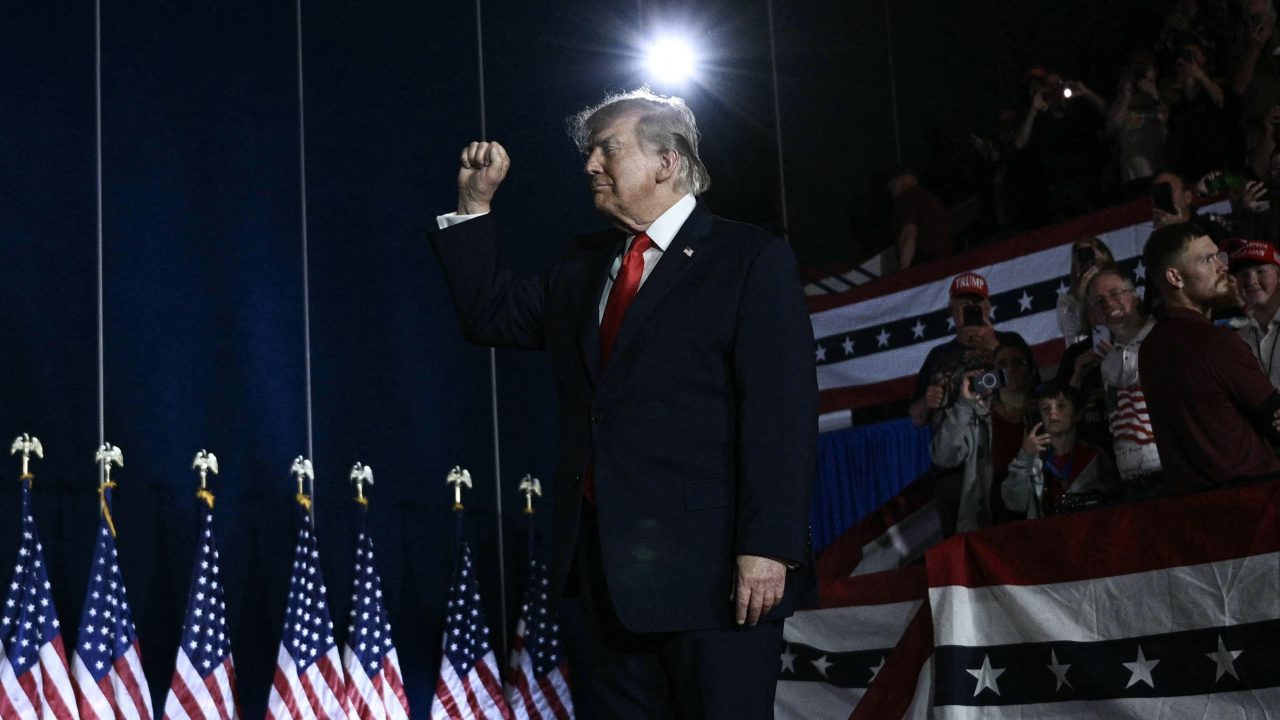
For the first two years of President Donald Trump’s second term, he has arrived at meetings abroad with real leverage to match his bombastic rhetoric.
Whatever gap foreign governments may have spotted between what Trump did and what the American people wanted, there was little doubt that he had the full machinery of the federal government at his back. Where governments were able to push back — as in China’s deployment of rare earth export controls — the exploitable weakness was found not in Trump’s position, but the vulnerabilities of the U.S. economy as a whole.
With the Republican Party’s disastrous defeat in Tuesday’s midterm elections, that has all changed. The significance of that change, which depends on a number of factors, including Republicans’ willingness to join Democrats in checking Trump, will sort itself out over the next few months.
But one thing is clear: When Trump arrives in Shenzhen for the Asia-Pacific Economic Cooperation meeting later this month, his foreign counterparts will receive him as a diminished quantity. He is now not just a lame, but also a freshly wounded duck.
The Chinese government, for its part, has signaled an early desire to keep things largely the same, with Mao Ning (毛寧), a spokesperson for China’s Foreign Ministry, calling the midterms a U.S. “domestic affair” that need not threaten the previous “understandings reached by the two heads of state.”
Those understandings include a U.S. tariff rate that has stayed level for a year, China’s pause on rare earth export controls, and Trump’s decision to delay a $14 billion arms sale for Taiwan.
America’s traditional allies in Europe and East Asia will be looking for ways to boost influence in Congress, even if some fear that the midterm defeat could reinvigorate Trump’s more reckless tendencies, according to a report from Politico.
But the larger question running through the minds of the world’s diplomats is what this midterm election means for the future of America’s role in the world more broadly.
Trump’s first victory in 2016 was such a shock that by the time analysts started to wrap their heads around its global significance, Covid was on its way in and Trump was on his way out. Then came the Biden administration, a relatively old-fashioned diplomatic outfit strongly intent on convincing U.S. allies that Trump’s style, if not every aspect of his substance, was just a mere hiccup.
Trump’s 2024 return brought the most ambitious declarations of all: That the U.S. had experienced a permanent vibe shift, away from the (in hindsight) relatively polite consensus of the post-Reagan era and toward something new, an as-yet post-liberal order where anything seemed possible.
From a foreign policy perspective, American voters’ massive rebuke of Trump’s agenda offers no easy lessons. Trump’s actions on the world stage are so incoherent — one day he’s a heartless isolationist, the next a reckless interventionist — that their opposite is hard to describe.
One takeaway that does ring true: Trump era’s transformation of U.S. foreign policy was never as hollow nor absolute as the strongest reactions implied. APEC’s attendees later this month may encounter a shell of what Trump once was. But the America they will deal with for years going forward is not yet clear.






Leave a Reply