
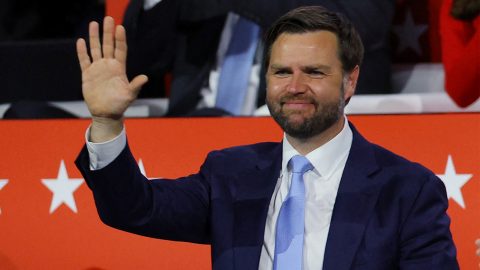
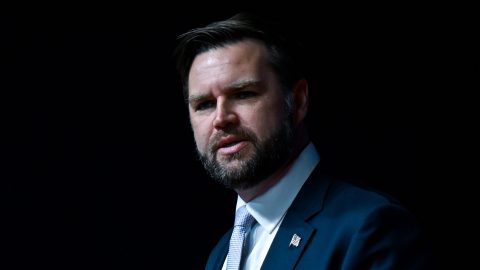
Vice President JD Vance thinks the Republicans lost the midterms because of the war in Iran and the cost of living. He says voters want politicians to put America first.
His analysis tells us a surprising amount about where the U.S. is going next. Where the U.S. goes matters a lot to Taiwan.
Vance wrote a long and winding post on X analyzing the loss. But the meat of it is the four things he says Republicans need to do to regain the Trump 2024 voters who chose the Democrats this week: End the war, focus on cost of living and inflation, put America first, and change our relationship with Israel.
Vance is attempting to distance himself from Trump so he can try to run for president in 2028 despite being part of the current administration. But realistically anyone who runs in the next election is going to play with similar themes.
It’s very easy to look at Vance’s four points, especially “Put America first,” and conclude that this is bad news for Taiwan.
The international becomes the domestic, and there is a strong stench of isolationism.
Quite a lot of Vance’s voters would like the sound of that.
But they’d be making a terrible mistake.
In the age of AI, there is no conceivable path to American growth and continued prosperity that doesn’t run through Taiwan, and specifically through a ready supply of Taiwanese semiconductors.
A Taiwanese company, TSMC, produces over 90% of the world’s most advanced semiconductors, many of them for an American company: Nvidia. Nvidia sells its processors to the big U.S. AI companies who use them to train their AI models.
The Republicans lost these elections even though the economy is growing well, because of prices. It could have been far worse, in a deep recession, which would be the outcome of the U.S. losing access to Taiwanese chips.
You can’t ensure America’s economic security without ensuring Taiwan’s national security.
If you don’t want to fight wars you can avoid, which is both the implication of Vance’s post and the correct moral position, that means you must effectively deter China from invading Taiwan.
That deterrence still currently holds, but it is shaky. The next Congress should put far more pressure on Trump to support Taiwan both in rhetoric, where he has been abysmal, and in arms sales, where he made an excellent start but has now effectively frozen them.
The next administration should preferably have a holistic economic security policy that leaves China in no doubt about where American interests lie and how they will be defended.
The lack of such a coherent worldview is precisely why the vice president is posting that the war in Iran cost them the elections, and the president is saying it was worth it.




Leave a Reply