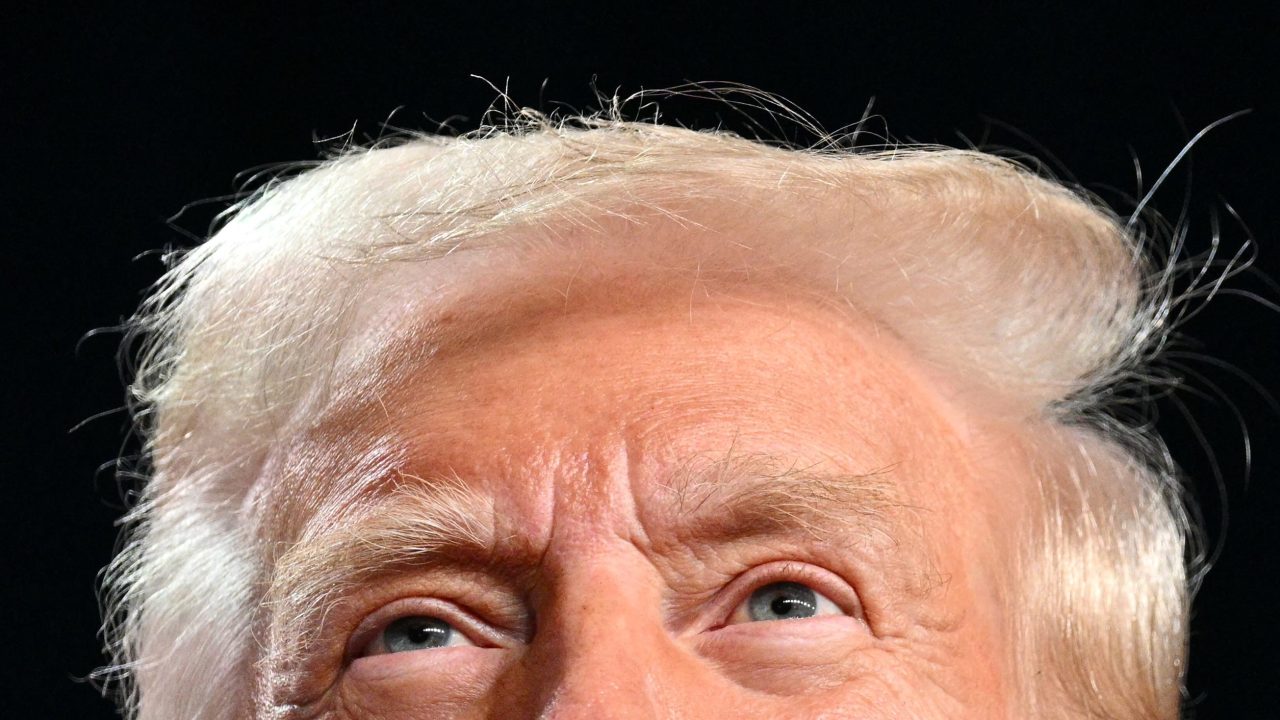
President Donald Trump believes he has the right to buy Greenland and “take” the Panama Canal (possibly by force). What might he think about China’s claim to Taiwan?
Domino Theory asked experts and policymakers in Taiwan to break down Trump’s foreign policy — to the extent that it can be understood at this point — and comment on the implications for Taiwan’s de facto sovereignty.
While some might find Trump’s comments about Panama and Greenland inconsistent with the isolationist rhetoric endorsed by “Make America Great Again,” Chen-Shen Yen (嚴震生), an adjunct research fellow at National Chengchi University focused on American and comparative politics, disagrees. Yen thinks that Trump has reverted to a version of 19th-century American expansionism inspired by the Monroe Doctrine, whereby the entirety of the North American continent can fulfill the American manifest destiny.
Under the Monroe Doctrine, expansion was a tool for American territorial and economic dominance. Trump has similarly stressed the strategic importance of Greenland and the Panama Canal. Trump said Greenland was an “absolute necessity” for U.S. security and he complains that the Panama Canal has become controlled by China.
This approach could pose issues for Taiwan, said Yen. “If [Trump] got the acknowledgement … that Xi Jinping (習近平) will respect America’s influence over the Western Hemisphere, then … in exchange, will Trump also respect Xi Jinping’s core interest in the South China Sea and Taiwan?”
Yen thinks that outside the Americas, Trump is willing to abdicate Washington’s leading role in global affairs. The U.S. remained hesitant to get involved in the two world wars until it was directly threatened, and Trump might take the same isolationist approach. If the U.S. isn’t directly implicated in a Chinese invasion of Taiwan, then it might not come to Taiwan’s defense.
Trump probably doesn’t care as much as the previous American leadership about the fact that Taiwan is a democracy. The internationalist approach the U.S. has taken to foreign policy since the advent of the Truman Doctrine in 1947 is anchored by the idea that more democracies in the world means more security and stability in the international system. Shihmin Chen (陳世民), associate professor at National Taiwan University specializing in international security and arms control, says that Trump’s foreign policy might very well divert from this paradigm, undermining a key plank of the U.S.’s commitment to Taiwan.
As opposed to considering Taiwan as a fellow democracy, Trump might be more inclined to view Taiwan as a client or customer. When Trump picked up former Taiwanese president Tsai Ing-wen’s (蔡英文) call when he was first elected in 2016, many viewed this as a watershed moment for Taiwan’s diplomatic standing. But Trump’s response to people’s warnings about taking the call was “that Taiwan is a big buyer of our [the U.S.’s] weapons. So it’s almost like he’s saying, … ‘I’m taking a call from my customer,’” said Yen.
In the lead-up to his election in 2024, Trump expressed displeasure with Taiwan as a “customer” on multiple occasions, implying that Taiwan doesn’t deserve American assistance because it has not contributed enough to its own defense. Trump has called on Taiwan to up its defense spending to 10% of its GDP, or about six times its current budget. Yet last week, the Legislative Yuan — which is currently controlled by Taiwan’s opposition parties — passed controversial budget cuts. Taiwan’s 2025 defense budget will constitute only 2.7% of its GDP, according to Andrew Yang (楊念祖), Secretary General of the Chinese Council of Advanced Policy Studies and former minister of the Ministry of National Defense. Taiwan’s struggle to fulfill Trump’s demands to increase its defense spending makes Yang “cautiously pessimistic” about how U.S.-Taiwan relations will develop under Trump.
These budget cuts “[challenge] Taiwan-U.S. regional security cooperation and may affect international confidence in Taiwan’s defense commitment,” said Loh Mei-ling (羅美玲), a Democratic Progressive Party (D.P.P.) lawmaker, in a written statement for Domino Theory.
Shihmin Chen of National Taiwan University thinks Trump is likely to continue arming Taiwan, perhaps to a greater extent than his predecessor. Even if Trump embraces some of MAGA’s isolationism, he likely doesn’t want Taiwan to be captured by China because this would undermine U.S. leadership and sow distrust in the U.S.’s global network of alliances and security commitments. At the same time, Trump desperately wants to avoid embroiling the U.S. in a physical conflict over Taiwan. The answer to this quandary is to boost Taiwan’s deterrent capability by selling it more offensive weaponry, which would be a shift from the U.S.’s current prioritization of deterrent and asymmetric weapons. Chen thinks that Trump may even want to secretly sell Taiwan nuclear weapons (though this would probably be illegal).
Regardless of how committed Trump currently is to Taiwan’s security, experts think Secretary of State Marco Rubio is good for Taiwan, although there is some uncertainty as to how much influence Rubio will ultimately have over MAGA supporters in the White House and Trump himself. Fang-Yu Chen (陳方隅), an assistant professor at Soochow University specializing in U.S.-China-Taiwan relations, thinks there is going to be a push and pull between the isolationist tendencies of MAGA and the traditionally internationalist approach of the Republican Party — i.e., people like Rubio and National Security Advisor Mike Waltz who have advocated for the U.S.’s support of Taiwan’s independence. Yen thinks it’s possible that Trump listens to the internationalists but that it’s more likely that Trump’s Cabinet will be compelled to fall in line because if you don’t go “along with Trump’s view, you get fired.” On the bright side, continued uncertainty about where the White House stands on Taiwan might deter China, according to Shihmin Chen: “If China cannot be sure … [about] what Trump will do, Xi Jinping will think about the worst scenario.”
For Taiwan, the immediate goal is to build relationships and foster trust with members of Trump’s security team. “It’s going to be a changeable, very dynamic, complex situation down the road,” said Yang. To deal with Trump’s unpredictability, Taiwan will need access to timely and first-hand information.


Leave a Reply