What issues matter in Taiwan’s election? Last week, we ran an article about the events that have marked Taiwan’s election campaign so far. Its conclusion was that, for now, discrete political events probably haven’t really impacted Taiwanese voting intentions all that significantly. But that absence raises the question of what people in Taiwan will actually be voting for and about. And it turns out various answers are available.
One prominent feeling is resignation that the election will be dominated by Taiwan’s relationship with China. Speaking to two sets of activists over the past few days — Tyler Prochazka, chair of UBI [Unconditional Basic Income] Taiwan, and one of the organizers behind the Vision Zero Taiwan pro-pedestrian campaign, Jonathan Knowles — the response to whether their issues can make it into the election conversation was that, essentially, the position has been filled. There’s not really much room for anything but China talk.
An expanded take is available, though, from professional Taiwanese election-watcher Nathan Batto, an associate research fellow at the Institute of Political Science, Academia Sinica, and author of the authoritative English-language blog on Taiwanese elections, Frozen Garlic. As mentioned in the previous article, he lists the “continuing threat from China” among several other “slow-moving long-term factors” that have shaped the election campaign.
For Batto, “satisfaction or not with DPP [Democratic Progressive Party] governance, the KMT’s [Chinese Nationalist Party’s] continual low popularity, the large group of voters unhappy with both major parties, fatigue with seven years of DPP domination, slow and not very equal economic growth and not great job prospects for younger voters, the continuing threat from China, and so on” are all factors in play right now.
Another view is that issues of any kind have not really been the focus thus far. Rather, it’s been more about the internal machinations of the main parties. “The real action is on the supply side, especially the nomination process,” says Kharis Templeman, research fellow at the Hoover Institution, who explains the differing fortunes of both the KMT and DPP on these terms.
For the DPP, whose presidential candidate is regularly topping polls with over 30% support from respondents, things look good because they’ve been able to present a unified image. “I thought there was a possibility that the DPP could come into this election cycle divided and not fully behind Lai Ching-te [賴清德], given his past challenge to Tsai Ing-wen [蔡英文] and her apparent preference for someone else to succeed her,” Templeman says. “But in the end, Lai cleared the field, Tsai endorsed him, and all indications are the DPP is all-in on Lai’s campaign. So Lai is about optimally positioned right now.”
On the other hand, things look less good for the KMT for the opposite reason. Their candidate is polling regularly below 20%, behind wildcard third-party candidate Ko Wen-je (柯文哲), because they’ve looked divided. “The KMT nomination process hasn’t gone as smoothly, obviously,” Templeman says. “In Hou You-yi, they ended up with a moderate candidate who can, in theory at least, appeal to swing voters. But the opacity of the process, and Terry Gou’s (郭台銘) renegade challenge to the nomination and his refusal to do more than the bare minimum for the party, have left Hou’s campaign struggling. I’ve also been surprised at how poorly Hou started the race. He was clearly hoping to be nominated, and had positioned himself for years to run. So why wasn’t he better prepared? It feels like he’s just started running while the other competitors have a big head start.”
Around the sides of these optics, actual policy issues that directly affect people’s lives do pop into view as the weeks come and go. But the point is that they haven’t been sticking around for long, just as none of the events appear to have done so far either. This Monday, for instance, Hou You-yi pledged to continue carrying out executions as president, but the evidence from the campaign thus far is that this won’t be a discussion point for long, whatever people actually think about the issue itself. As an anecdotal point, when I’ve asked three younger Taiwanese friends (aged 23 to 32) what they think the election has been about, I’ve got the same feeling from each. They’ve all said “China” first, political maneuvering second (disparagingly), and then, when pushed, there was one mention of housing issues and two of energy issues (particularly nuclear).
From here, the experts suggest potential shifts may well come in a similar form.
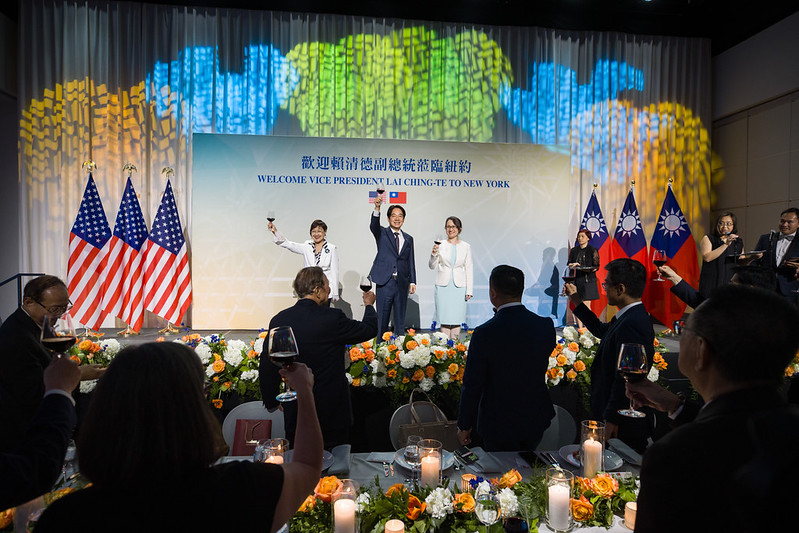
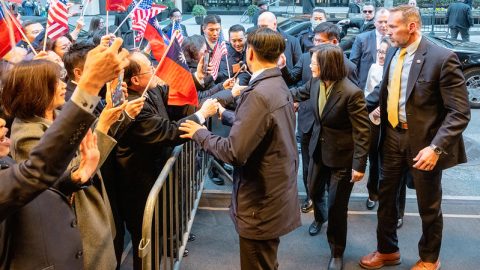
Whether Terry Gou runs as an independent, endorses Ko Wen-je or acts as his running mate and nominee for vice president, could all alter outcomes, according to Batto and Templeman. As could other running mate issues, such as if Vice President Lai is able to convince Hsiao Bi-khim [蕭美琴], Taiwan’s representative to the United States, to join his ticket. And then, finally, according to Templeman, there is the potential impact of two notable visits to the U.S. Thus far, Vice President Lai’s visit to the U.S. has not seen China respond with military exercises as some had believed may happen, but the questions it raised about the possibility of Chinese attempts to sway opinion in Taiwan will remain relevant. Meanwhile, Hou’s planned visit in September could either “help him pull ahead of Ko and benefit from a shift in perceptions about his viability” or intensify the grumbling from parts of the KMT who wanted someone else, according to Templeman.
So, what issues matter in Taiwan’s election? A lot, but not necessarily a broad range of policy-based ones so far.
Image: Office of the President of the Republic of China (Taiwan)



Leave a Reply