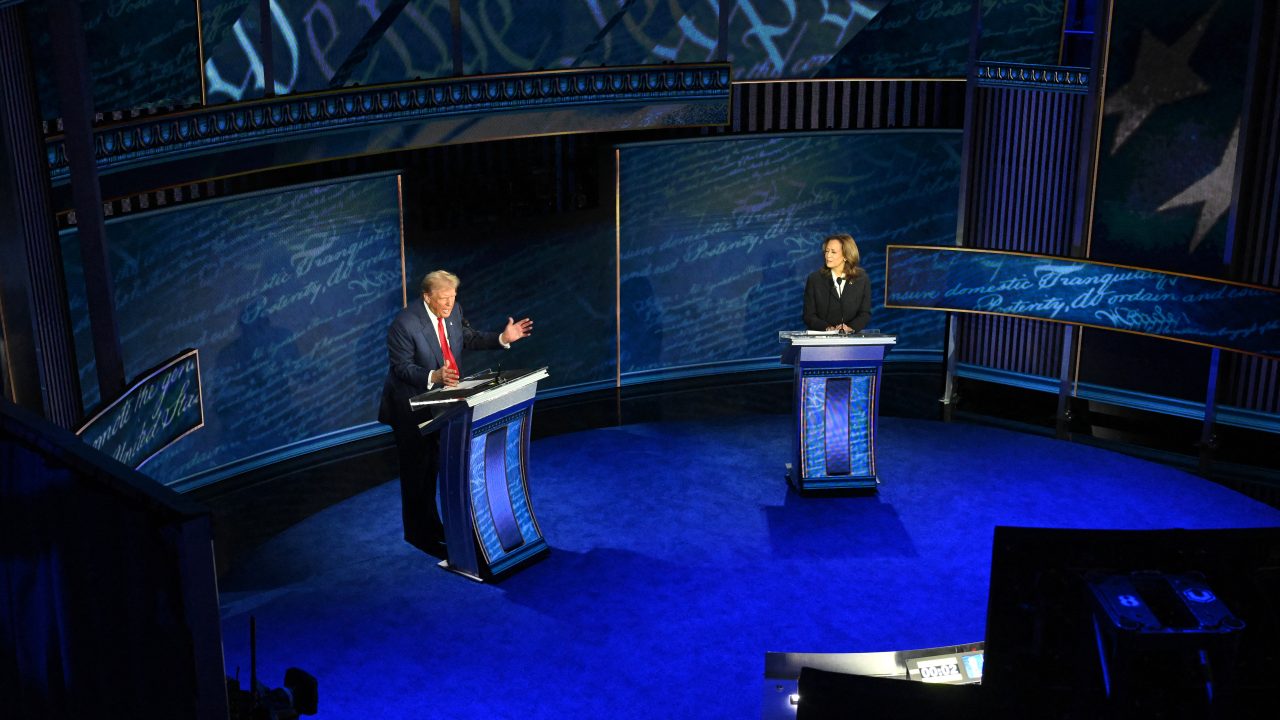
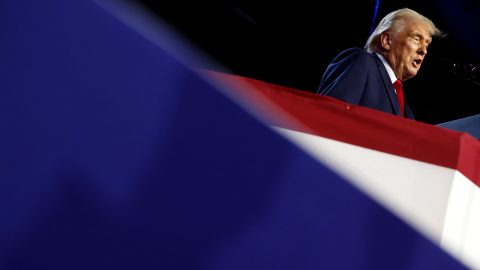
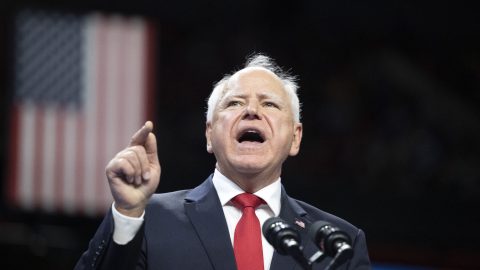
The topic of semiconductors came up within the first 12 minutes of the U.S. presidential debate between Vice President Kamala Harris and former president Donald Trump. In response to a question about Trump’s proposed trade tariffs, Harris said, “You wanna talk about his deal with China? What he ended up doing … is selling American chips to China to help them improve and modernize their military.” Trump replied, “they [China] bought their chips from Taiwan. We hardly make chips anymore because of philosophies like they [Biden and Harris] have.”
Trump’s comments bring to mind a July interview he did with Bloomberg Businessweek, during which was questioned about whether he would defend Taiwan from Chinese invasion. His response: “I wouldn’t feel so secure right now, if I was them, but remember this: Taiwan took our chip business from us, I mean, how stupid are we?” The implication is that the U.S. doesn’t owe Taiwan defense assurances because Taiwan “took” chip manufacturing business from the U.S.
Both Harris and Trump painted the semiconductor industry and U.S. policy in broad strokes — with some truth but largely incorrectly — in order to discredit the other. Trump incorrectly implied that Taiwanese and American semiconductor businesses are engaged in a zero-sum competition that the U.S. has lost. Harris failed to acknowledge that Biden’s semiconductor export controls — which aim to prevent China from using American chips to modernize their military — were built on those implemented during the Trump administration.
What Trump Got Wrong
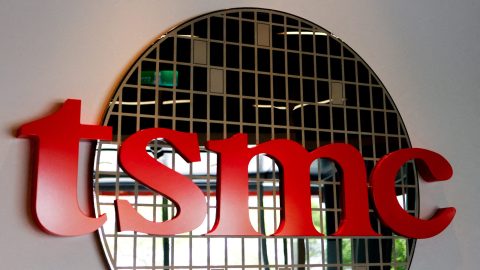
In 1971, American technology company Intel produced the first commercially available chip and proceeded to dominate the semiconductor industry for decades. Intel now lags behind, struggling to advance its manufacturing processes quickly enough to compete with Taiwan’s TSMC.
TSMC outcompeted Intel by pioneering a more efficient system for semiconductor production. Intel produces chips according to a vertically integrated device manufacturing model, where the entire process of semiconductor production from design to manufacturing to packaging is done by one company. TSMC introduced specialization to the semiconductor industry through the fabless/foundry model. This model includes fabless firms, which are responsible for the design of semiconductors, and foundry firms, which manufacture these designs. Since semiconductor manufacturing is a highly intricate and capital-intensive process, it is unlikely that the massive and ever-growing demand for faster chips could be satisfied without the economies of scale TSMC is able to achieve by solely focusing on manufacturing. As a result of TSMC’s successful experiment, Taiwan now produces 60% of the world’s chips and over 90% of the most advanced ones.
By becoming the entity to which firms can outsource chip manufacturing, TSMC facilitated the rise of chip designers, which is where American companies dominate. As Daniel Nystedt, vice president and semiconductor industry analyst at TriOrient Investments, said during a panel discussion at Semicon in Taiwan last Thursday, massive American chip design companies were able to “develop because there was a foundry for them. Nvidia is one. Qualcomm is another. Broadcom is another … AMD would exist, but the other ones are companies that may not even exist today if they didn’t have a manufacturing partner like TSMC, and that is about four trillion dollars in stock market capitalization, if you want to put a number on that.” For reference, in June 2024, Nvidia briefly surpassed Microsoft as the world’s most valuable company. TSMC is the exclusive manufacturer for Nvidia’s H100 and A100 AI processing chips, which power applications like ChatGPT.
Nystedt noted that American semiconductor toolmakers benefit greatly from TSMC. Companies like Applied Materials, Lam Research and KLA Corporation are the top toolmakers in the world for various equipment required for chip manufacturing. In 2021, Taiwan imported around $5 billion worth of American semiconductor manufacturing equipment, according to figures published by Taiwan’s Ministry of Finance. And TSMC’s capital expenditure is only growing. This reciprocal relationship “creates jobs everywhere, it creates prosperity everywhere, and there’s tremendous benefits on both sides,” said Nystedt.
In contrast to what Trump claimed, TSMC and American businesses jointly changed the shape of the semiconductor supply chain, and they profit greatly off of this specialization. “This is a misunderstanding on Trump’s part. The president has a lot on his plate; maybe a friend or a competitor in Taiwan told him that,” Taiwan’s Economy Minister Kuo Jyh-huei (郭智輝) said to reporters last Monday.
What Harris Got Wrong
When Harris claimed in the debate that Trump sold chips to China to aid in its military modernization, she didn’t mean that Trump himself sold chips to China, she likely meant that he didn’t do enough to block advanced American chips from being exported across the Pacific. This is an uncharitable characterization of Trump’s strategy, and he could have easily rebutted this by referencing how Biden’s stringent semiconductor trade policy is actually an extension of his administration’s approach.
The Trump administration remade the U.S. export controls regime by emphasizing that semiconductors are critical to national security and unilaterally leveraging trade policy to prevent China from accessing this technology. Trump was mainly worried about Huawei and famously placed the Chinese technology giant on the Bureau of Industry and Security’s Entity List in 2019. This designation barred Huawei from purchasing U.S. technology, including semiconductor chips, without a license. In the past few years, the Biden administration has expanded on Trump’s policy by implementing a series of increasingly tightened export controls on semiconductors and semiconductor manufacturing equipment to prevent China from advancing cutting edge technology like AI and quantum computing. The most recent set of export controls was released just last week.
The Biden administration’s focus on the multilateral implementation of semiconductor export controls — particularly with the Dutch and Japanese — is also a continuation of Trump’s efforts. Beginning in 2018, the Trump administration underwent multiple rounds of negotiations with the Dutch government to successfully convince them to block ASML from selling its advanced chipmaking tool, EUV lithography, to China.
As the foundation for both commercial and military technology, it is fitting that this topic is gaining attention on the presidential debate stage. But the inaccuracies stated by both candidates should be cause for concern. Chips are intimately entwined in geopolitics, particularly cross-strait issues. Both Harris and Trump must be adequately informed on the semiconductor supply chain so that if either becomes the next president, they don’t make political decisions based on a flawed understanding of it.

Leave a Reply