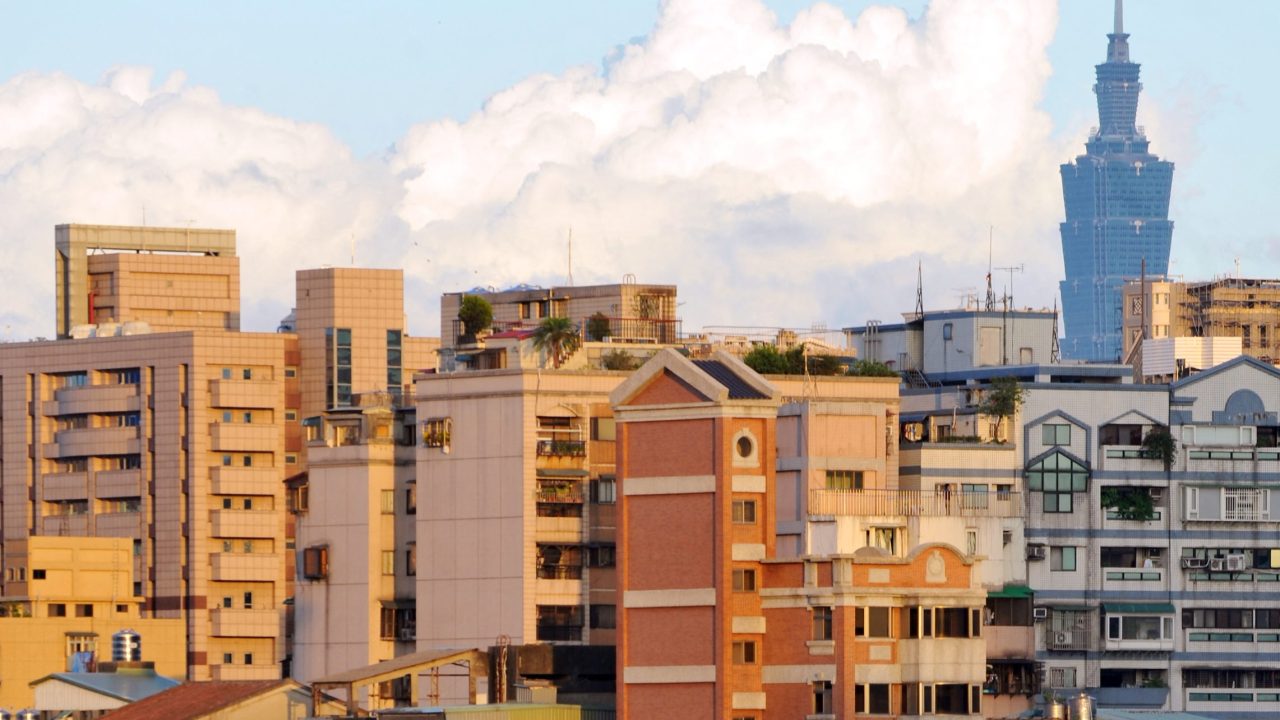
Here’s a contrarian thought: What if the declining real estate markets of China, Japan and Taiwan are, over the long term, becoming a comparative advantage over the United States and Europe, where housing costs keep rising thanks to mass migration into urban centers and chronic over-regulation of housing supply?
The conventional wisdom holds that falling housing values in China, Japan, Taiwan and even South Korea — all facing population decline and lower family formation — are unambiguously bad because of the destruction of household wealth. And there’s no doubt that real estate has been the primary driver of wealth accumulation for most Asian families. Having lived and worked in Hong Kong and Taiwan for decades, I can assure you there is a fundamental, almost cultural belief that owning property is the surest path to economic security.
But in the real world, life is cash flow. Values reset all the time — for products, for companies, and yes, for property. If the value of your real estate holdings goes down, you are less wealthy on paper. But for everyone now seeking housing, falling prices — and especially falling rents — mean more cash flow at their disposal every single month. Wealth and income are not the same thing, and we are not living in some unique world where both must decline together. If salaries and incomes continue to rise, people get wealthier. If they simultaneously have to spend less on housing, they get wealthier still. Could you have both — cheap housing that also appreciates? Perhaps that’s the best of both worlds, but it’s not the world on offer.
This is not an original thought on my part. Former World Bank President David Malpass is the one who has pointed out to me many times not to overplay the real estate decline in China. I’m uncertain if he wants the lineage, but he is the father of this concept for me. I also had the benefit of knowing the Nobel laureate economist Gary Becker, who always stressed that for most people, life really is cash flow. Yes, there is wealth in housing — but look at London, Paris, Prague, even Moscow. People sit in homes that appreciate year after year while their incomes stagnate. We’ve all heard the term “house poor.”
I would argue that we are entering an era — accelerated by COVID — in which location is no longer the most important thing in the world. Companies across the US have been leaving major urban cores for the suburbs, with cheaper housing and office space among the explicit motivations. How many executives do we all know who now live well outside major urban centers, commute in one or two days a week, and have found they can function and prosper just fine working remotely?
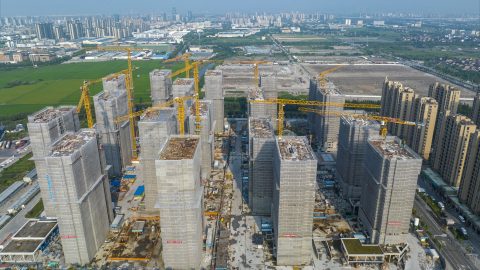
Now apply that logic to China, Japan and Taiwan. Housing costs are falling in all three countries, yet incomes continue to rise, and employment prospects — with the exception of China — remain strong. The scale of the reset is remarkable. In China, new home prices have now fallen for roughly three consecutive years, and in many cities prices are down 40% or more from their 2021 peak; commentators there note that in real terms, prices have retraced to levels last seen more than a decade ago. Japan, for its part, counts roughly nine million akiya — vacant homes — many available for next to nothing outside the major metros.
I operate in the property sector in Taiwan, and I can assure you that while central Taipei and other major urban cores remain firm in pricing, an hour outside any major city is a landscape of empty homes and cut prices. Japan shows the same pattern. And in China, young couples increasingly don’t seek to purchase a home at all — it’s a constant hunt for the best rental deal, made easier every month as landlords compete for tenants.
For readers outside the property world: a capitalization rate, or “cap rate,” is the annual net rental income a property generates divided by its price. It’s the yield on real estate — the return a landlord earns on the money invested. A $1 million building producing $40,000 a year in net rent has a 4% cap rate. Low cap rates mean prices are extremely high relative to the income the property actually produces.
I know of multiple projects in Shanghai and Beijing where the cap rate is near 2%. In Taiwan, a 4% cap rate is considered the norm, but outside Taipei you’re looking at cap rates of barely 1%. In other words, the landlord’s return is 1% a year — it doesn’t come close to justifying the price just paid, and it signals that from a tenant’s perspective, renting is extraordinarily cheap relative to buying. For the household, that’s found money every month.
Contrast that with the United States, where the housing shortage is now a matter of official concern: the White House Council of Economic Advisers puts the shortfall at 10 million or more single-family homes, while Realtor.com estimates a supply gap of about 4 million. Whichever number you prefer, the direction is the same. American home prices have risen 82% since 2000 while incomes are up just 12% — a staggering mismatch that cheap mortgages masked for years. Housing is so scarce in major markets that cities are now pursuing mass office-to-residential conversions — a very good idea, but an expensive one.
In the world of high finance and Silicon Valley big tech, elevated housing costs may not move the needle much. But for manufacturing — or any industry where labor costs matter — Asia’s collapsing cost of housing is a genuine competitive weapon. If your workers don’t need as much for housing, the pressure to pay ever-higher wages dissipates. Add in far higher American housing costs and the cost of commercial space, and what you’re looking at is a structurally more expensive United States.
Something in the US already proves the underlying point: the repricing of urban retail. Frankly, ground-floor retail in New York, Boston and San Francisco went through a brutal reset. I won’t argue whether it was killed by Amazon or by people simply buying less stuff, but the fact is that retail space declined in value and rents fell rapidly. Yes, a few trophy corridors remain solid, but walk around New York, San Francisco, or Chicago and you see storefronts for rent everywhere — and, increasingly, you see businesses in those spaces that could never have afforded them before. That is not a bad thing. It’s a repricing of an asset class, and the arrival of new businesses taking advantage of it is exactly how markets are supposed to work.
The same dynamic is now playing out across North Asia — except there it applies to housing and commercial space alike, and it applies almost everywhere outside the top city centers.
The fair counterargument is that falling property values damage household balance sheets, suppress consumption through the wealth effect, and — in China’s case — wreck local government finances that depended on land sales. All true, and the transition is genuinely painful, particularly for the generation that bought at the top. But transitions end. What remains afterward is a cost structure: a country where a young family can house itself for a fraction of its income has a durable advantage over one where housing devours 40% or 50% of a paycheck. The pain is cyclical; the cost advantage is structural.
Cheap housing is cheap living, and cheap living is competitive labor, higher disposable income, and more room for everything else in the economy. The West should be careful about feeling smug watching Asian property prices fall. In a decade, we may realize they were the ones getting the bargain.
Mark Simon is former group director for Next Digital, parent company for Apple Daily.





Leave a Reply