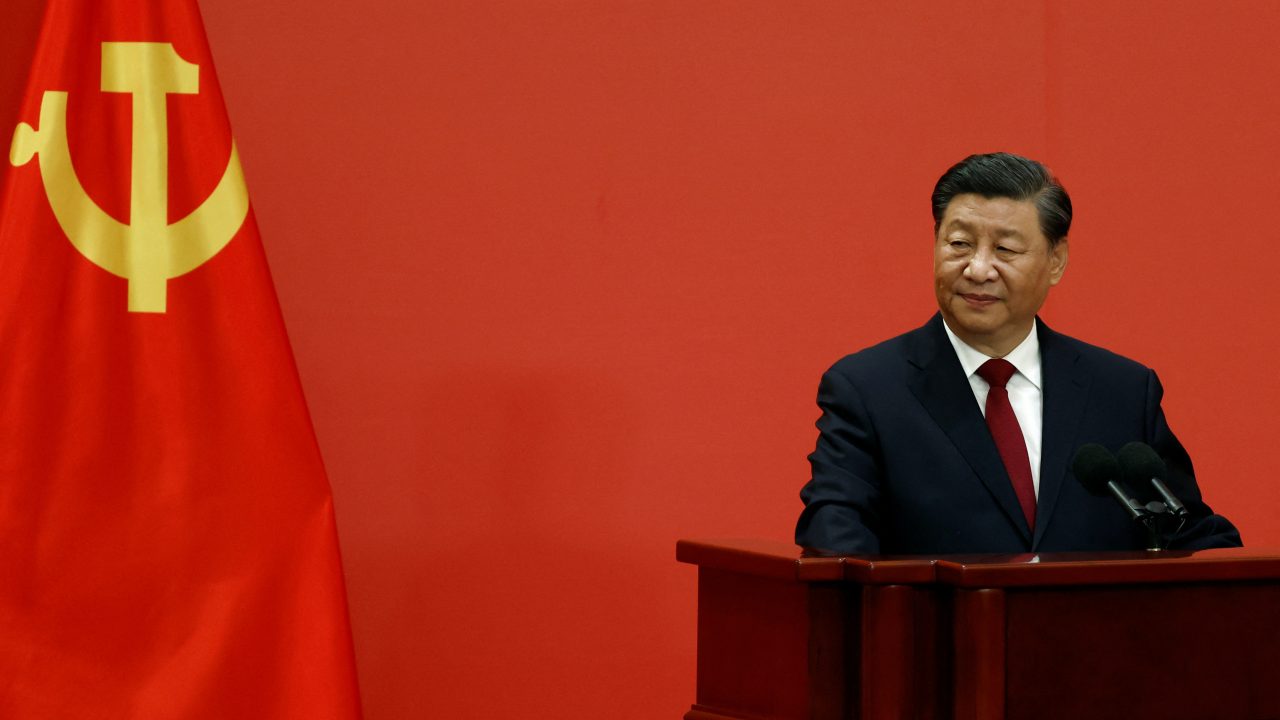
China is convening the fourth plenum of the 20th Communist Party congress in Beijing from Monday to Thursday this week. The top order of business will be the Chinese Communist Party’s 15th five-year plan, which will direct the country’s economic policy from 2026 to 2030. The full version of the plan won’t be released until March next year, but the party is expected to release a summary communique from the plenum, which should provide the best insights so far into the plan’s main themes. Below is Domino Theory’s primer on the big questions surrounding the plenum.
Background
The Chinese Communist Party holds seven plenary sessions between each party congress, each of which are attended by the roughly 300 members of its Central Committee, the country’s highest governing body. (For a briefing on the recurring events on China’s economic decision-making calendar, see here.) The function of plenary sessions is primarily to align party officials around shared policy objectives, while presenting an image of collective governance.
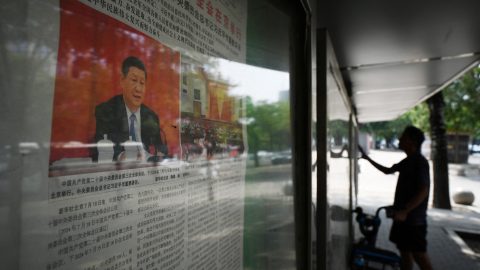
In April, Chinese President Xi Jinping (習近平) convened an economic symposium with China’s provincial governors in Shanghai. A readout from the meeting published by the state-owned outlet People’s Daily offered an early indication of the party’s priorities for its next five-year plan. According to analysis from the Jamestown Foundation, Xi intends to shift the focus of its economic strategy from maximizing growth to promoting strategic endurance. This will mean a continued focus on high-tech industries crucial to its competition with the United States, such as semiconductors and aerospace, possibly at the expense of employment and economic growth. In the economic plans of the first decade of Xi’s reign, security considerations stood behind or alongside the impact of Chinese economic planning on ordinary citizens. Now it appears security will stand front and center.
Purge Surge
Analysts will also be watching the fourth plenum for clues about recent purges at the highest ranks of the Chinese military. According to Neil Thomas, a fellow at the Asia Society, more than half of the People’s Liberation Army members of the Chinese Communist Party’s Central Committee have been “facing political trouble” since the beginning of 2024, a designation that includes everything from absence at public events to outright dismissal from the party. The percentage is lower among civilian officials, but disciplinary investigations have roiled the ranks there as well. Earlier this month, now-former Governor of Shanxi Province Jin Xianjun (金湘軍) was expelled from the party following a corruption investigation.
China watchers are split on what the purges mean for Xi’s leadership. Thomas has argued that purges are a show of strength. But others argue that many purged members of the military were perceived to be close confidants of Xi, suggesting that he might be losing his grip over the military. Attendance at the fourth plenum is unlikely to settle these debates, but it could clarify the status of some of the many officials who have not been seen in public for months.
Integrating AI
AI is expected to be a key focus of the 15th five-year plan. On August 27, China released its AI Plus plan, outlining steps for AI advancement and diffusion across China’s economy. China’s 15th five-year plan will likely articulate these coordinated policy initiatives within the broader strategic framework of China’s tech leadership and economic stability.
The plan will likely focus on targeted investment in high-tech sectors in an effort to secure China’s economy against U.S. trade restrictions on chips and chipmaking technology, which threaten to limit AI growth. To tackle China’s aging population, shrinking workforce and declining fertility rates, the plan may also outline how AI can boost workforce productivity and consumption.
As stated in the 2017 New Generation Artificial Intelligence Development Plan, China plans to become the world’s leading center for AI innovation by 2030. The thrust of China’s medium-term AI strategy will be about striking a balance between control and growth.
Taiwan
As has happened in the past, the 15th five-year plan will likely include a section on Taiwan. The previous five-year plan called for promoting the “peaceful development of cross-strait relations and the reunification of the motherland,” with sections on “cross-strait integrated development” and “cross-strait cultural exchanges.” The next five-year plan will likely feature more of the same CCP boilerplate about adhering to the “One China” principle and the “1992 Consensus,” as well as curbing “separatist” activity in Taiwan. But it’s possible China will somehow strengthen its language, perhaps by omitting the word “peaceful.” Premier Li Qiang’s (李強) work report submitted to the National People’s Congress that year notably omitted “peaceful.” Although Chinese officials have not dropped the word entirely, they seem to have used it less frequently in the past few years.
Boosting Consumption
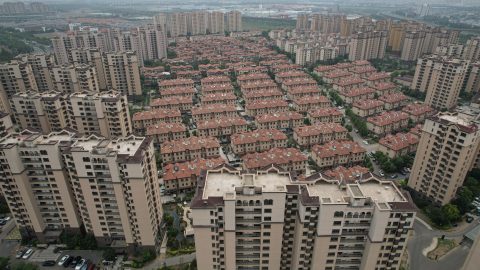
U.S. Treasury Secretary Scott Bessent has called on the Chinese government to prioritize boosting domestic consumption in their forthcoming five-year plan. China remains the world’s leading export juggernaut. But in recent years it has struggled to boost its domestic consumption. With a weak social safety net, restrictions on consumer credit and an aging population oriented toward saving, the Chinese people spend a much lower percentage of their income than citizens of Western countries. These phenomena have slowed China’s transition from production- to consumption-led growth.
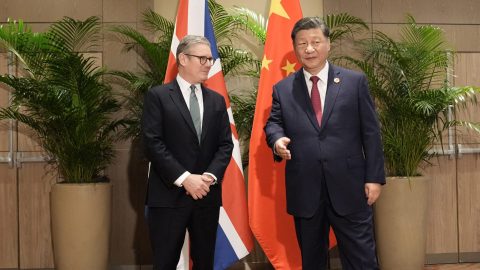
If recent policy is any indication, Xi will be hesitant to take the strong measures analysts say are necessary to move the needle. This has been a source of frustration for officials like Bessent who want to rebalance the U.S. trade relationship with China, but also leaders in the U.K. who have seemed to pin their hopes for economic growth on Chinese consumers.
Trade War
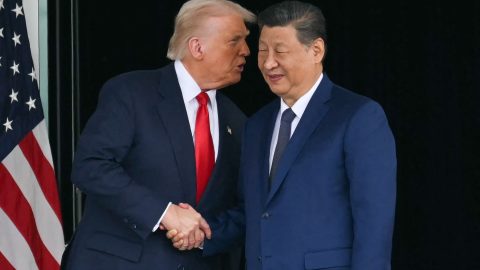
The plenum comes amid a reheating of the U.S.-China trade war. On October 9, China announced a dramatic expansion of its export controls on rare earth metals, a crucial segment of the global technology supply chain. Before the announcement, the trade war had been in a monthslong truce as Trump and Xi prepared to meet in person at some point later this or early next year. But China’s announcement has thrown a wrench in that. Trump responded on October 10 in a social media post threatening to impose an additional 100% tariff on all Chinese goods imported to America. It is scheduled to go into effect November 1. Bessent said Friday that he expects to meet with Chinese Vice Premier He Lifeng (何立峰) in Malaysia in an attempt to defuse the conflict.
The fourth plenum is unlikely to yield any updates on the trade conflict. It will be focused more on long-term economic policy. But the recent fights over rare earth metals, an industry which Beijing has deliberately worked to dominate, illustrates the impact of Chinese economic planning on the global economy, which remains heavily reliant on China for a range of high-tech products from rare earths to pharmaceutical chemicals to solar panels.


Leave a Reply