“Once upon a time, there were two kingdoms that were the worst of neighbors. So vast was the discord between them that it was said only a great hero or a terrible villain might bring them together.”
Those are the opening lines of the 2014 movie “Maleficent,” a retelling of Disney’s 1959 take on “Sleeping Beauty.” Maleficent, the titular character, is the wicked fairy, the villain of the classic fairy tale. But the 2014 film rehabilitates Maleficent, explaining why she turned bad and giving her her own fairy-tale ending where she is the one to save the sleeping princess.
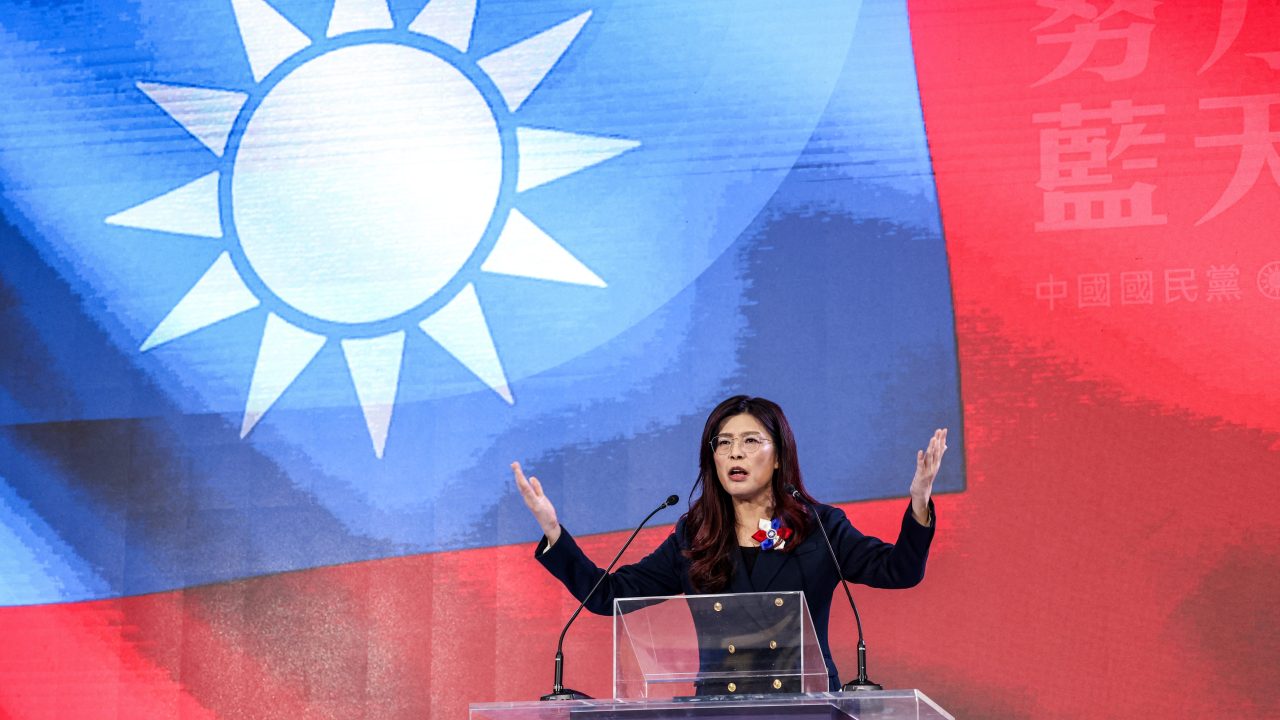
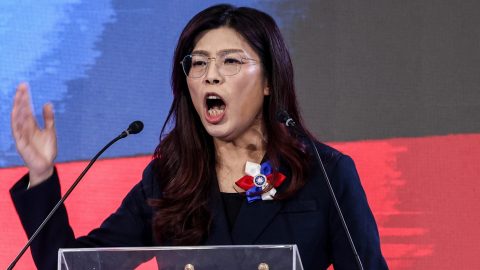
It was thus an interesting choice for Cheng Li-wun (鄭麗文), leader of the Chinese Nationalist Party in Taiwan, or KMT, to dress up as Maleficent on October 31, which happened to be not only Halloween but also Taiwan’s annual queer Pride march.
Cheng is a polarizing figure. She is loved by her supporters and hated by her opponents, far more so than almost any KMT figure. Some legislators from her own party often seem lukewarm about her. All of this is because she is steering the party toward a far more China-friendly policy platform.
Cheng’s support for closer ties with China, which lest we forget is trying to annex Taiwan, helped her win the leadership election last year. But she has yet to be tested by Taiwanese voters. Cheng herself will not be on the ballot in Taiwan’s local elections later this month.
In a Facebook post explaining her costume choice, Cheng said (in Mandarin): “In fairy tales, the black witch is always seen as an evil symbol, but the movie tells us that when we put aside prejudice, we can see a person’s true nature.”
Aside from her Pride message that “every sincere love deserves to be understood and respected,” Cheng is making a broader plea.
The KMT’s leader is accused by her enemies of being a traitor, someone who wants to sell out Taiwan to China. When she went to Beijing to meet Chinese President Xi Jinping (習近平), a Taipei Times editorial described it as “a betrayal of Taiwan.”
It’s obvious that Cheng is being self-referential. She knows that she is a bete noire, an actual “black witch” in the eyes of many, and so this character choice is a playful way of acknowledging that, and simultaneously saying that she isn’t hurt by it.
But is she really?
Maleficent is a deeply hurt figure. In the film, she is so damaged by her former lover the king that she curses his daughter to sleep until she is woken by “true love’s kiss,” a kiss that she believes can never come.
Dressing up as an evil queen might not be thumbing your nose at the establishment. It might be expressing a deep angst about how people see you, a plea for them to look deeper and find your inner good.
Genuinely, it must be lonely at the top of the tower, surrounded by nothing but spinning wheels. Or indeed in KMT headquarters, even if you believe, as Cheng clearly does, that you can eventually win over the country to see the wisdom of your more China-friendly approach.
And this is where that other theme of the movie returns, because Maleficent isn’t just a fairy godmother who is tragically misunderstood, she is also the one who unifies two kingdoms that were terrible neighbors.
In fact, the last lines of the movie echo the first: “In the end, my kingdom was united not by a hero or a villain, as legend had predicted, but by one who was both hero and villain.”
Taiwanese media has reported Cheng’s dress choice in a straightforward way. Seemingly no one has picked up on the fact that she was also cosplaying as a unifier who will be perhaps both loved and hated for what she has done.
Was this a conscious decision by Cheng? A Freudian slip? Or a mistake by someone who never watched the film?
Taiwanese might vote for a misunderstood figure who deserves to be loved. They probably won’t vote for someone who sees herself as the villain.




Leave a Reply