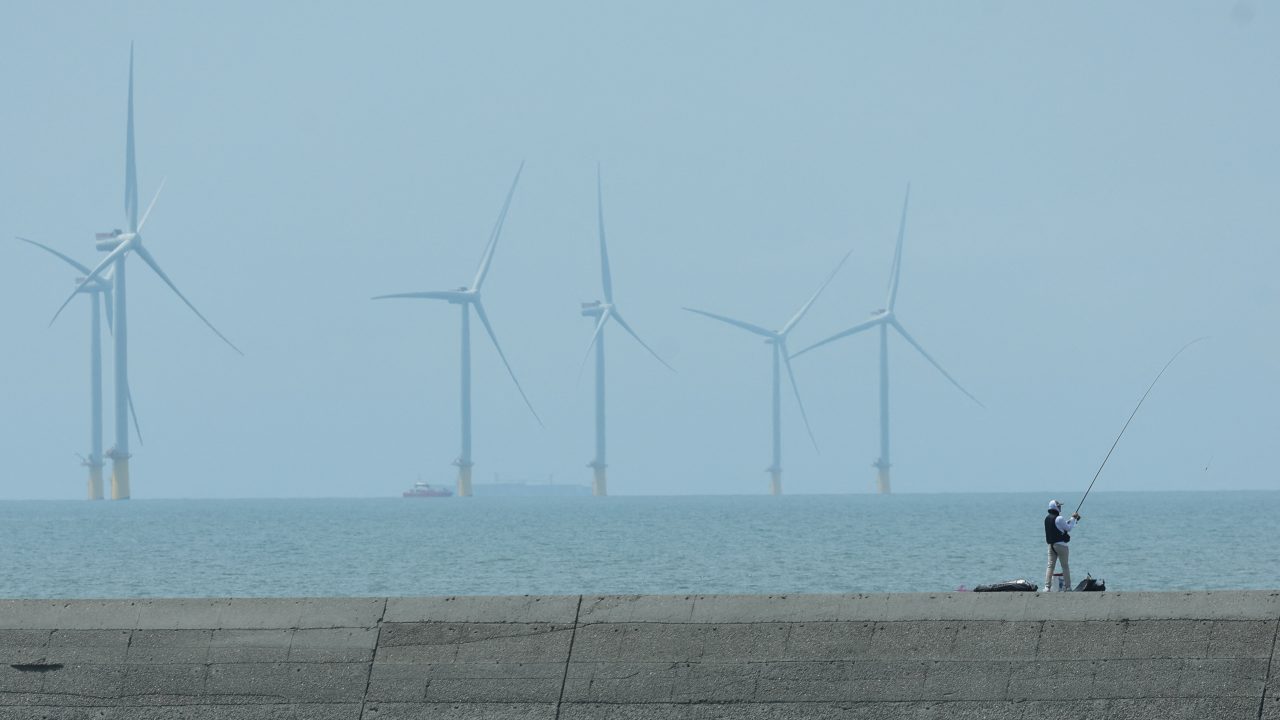
Last month, as Taiwan closed down its final nuclear plant, Google signed a geothermal power purchase agreement, or PPA, with Baseload Power Taiwan, a Swedish geothermal energy company. The project it funds will provide 10 megawatts of energy to the local grid. Google also signed a PPA with Copenhagen Infrastructure Partners, investing in the Fengmiao I offshore wind project off the coast of Taichung, which will provide 495 megawatts of energy to the local grid.
These new PPA deals — in which the company has agreed to buy electricity directly from renewable energy providers at a certain price for a number of years — were greeted with complimentary articles on energy industry sites and a statement from Google along similar lines.
“Building on our recent partnership to support a 1 gigawatt pipeline of solar development in Taiwan, these geothermal PPAs reflect our commitment to advance a suite of energy solutions to support our local data center and operations with clean electricity, while opening up pathways to scale geothermal development across the Asia-Pacific region and globally,” a Google Asia statement said.
What this smooths over, however, is the large disparity between the amount of energy these individual renewable developments produce and the amount of energy the likes of Google are currently using up.
Single large data centers such as those operated by Google in Taiwan’s Changhua County consume huge amounts of energy, regularly reaching more than 100 megawatts or more in continuous energy use.
Energy put toward artificial intelligence development in Taiwan will likely be eight times higher by the end of 2028 than was at the end of last year, and Taiwan’s overall energy consumption is expected to increase by 12 or 13 percent between then and 2030.
Against such large increases in energy consumption, Taiwan is missing its targets for renewable energy, and last year its renewable growth decelerated. It added around 2.7 gigawatts of renewable energy capacity in 2024, more than 1 gigawatt short of the 3.824 gigawatts of capacity it added in 2023. That meant, as of November 2024, Taiwan renewable energy capacity sat at 20.687 gigawatts, making up 11.1% of total energy production.
If that performance is replicated in 2025, Taiwan will miss the recently lowered Ministry of Economic Affairs 2025 target of 15% renewable energy by a distance. And that is not all. The real measure of an energy transition’s success is reducing outright carbon emissions — the Earth’s atmosphere responds to changes in carbon parts per million, not percentages of renewables — and on that metric Taiwan has barely moved since 2005.
Taiwan’s net carbon emissions in 2022 totaled 264.13 million metric tons of carbon dioxide equivalent, down from 268.89 million metric tons in 2005, according to figures used by Taiwan’s Central News Agency. That’s a roughly 1.77% reduction in net carbon emissions over the last 17 years. Other methodologies produce different figures, but none point to dramatic reductions.
This situation has seen Taiwan singled out for criticism by climate watchers. In an April report, Greenpeace accused chipmakers in Taiwan and South Korea of driving up fossil fuel use as they expand capacity to produce more chips meant for AI-based end uses.
“AI chipmaking is being leveraged to justify new fossil fuel capacity in Taiwan and South Korea — demand that could, and should, be met by renewable energy sources,” Greenpeace said. “Across East Asia, there are many opportunities for companies to invest directly in wind and solar energy, yet chipmakers have failed to do so on a meaningful scale,” it added.
But this “failure” to invest is not an accident. It is, rather, a symptom of volatility in renewable development profits that investors do not like — similar to that which has been charted in marketization efforts elsewhere.
Taiwan’s slower growth in new renewable developments last year did not come from nowhere. The government continued to lower the subsidised rates at which developers could sell their renewable energy — known as feed-in tariffs — meaning less protection from fluctuating market rates. In that context, it is predictable that renewables in Taiwan look like a less enticing investment.
“[D]eclining feed-in tariffs, intended to promote direct sales of green energy to private enterprises, have led to an unstable market,” a report published by the European Chamber of Commerce explained in January.
“Developers are now incentivized to sell electricity directly to companies, but the volatility in market prices [emphasis added], coupled with unclear transaction information, has resulted in many firms opting for minimal green power procurement to meet supply chain requirements, rather than committing to more ambitious renewable energy targets.”
Google-style longer term PPA agreements do not solve this problem. Companies as large as Google can afford to sign stable energy agreements that last years, but smaller energy purchasers can’t. Taiwan’s government hopes these companies instead adopt time-of-use tariffs — administered by national energy provider Taipower — which means paying for lower-cost off-peak electricity that can then be stored before being used or sold on again during peak hours. But so far the take-up for that has been less than 3% — likely for a variety of reasons, including companies not having the flexibility to shift electricity usage to off-peak times and the potential to end up paying higher bills for energy usage during peak hours.
A fundamental problem, then, is that as Taiwan’s government pulls back direct government support for renewables, replacement market mechanisms are so far failing to make renewable developments look like a safe enough bet for investors. This is exacerbated by the fact that small and medium-sized developers dominate Taiwan’s renewable industry. As banks primarily evaluate finances when approving renewable energy loans, without the largescale backing of Taipower, smaller developers struggle to secure financing.
Other problems with Taiwan’s renewable energy market certainly exist. There are longstanding issues with space and permitting. But this is the newer element of what is going wrong and it is not widely understood. In the end, it means Google’s headline investments don’t change the wider equation: Taiwan’s renewable energy production is right now falling behind its energy use.





Leave a Reply