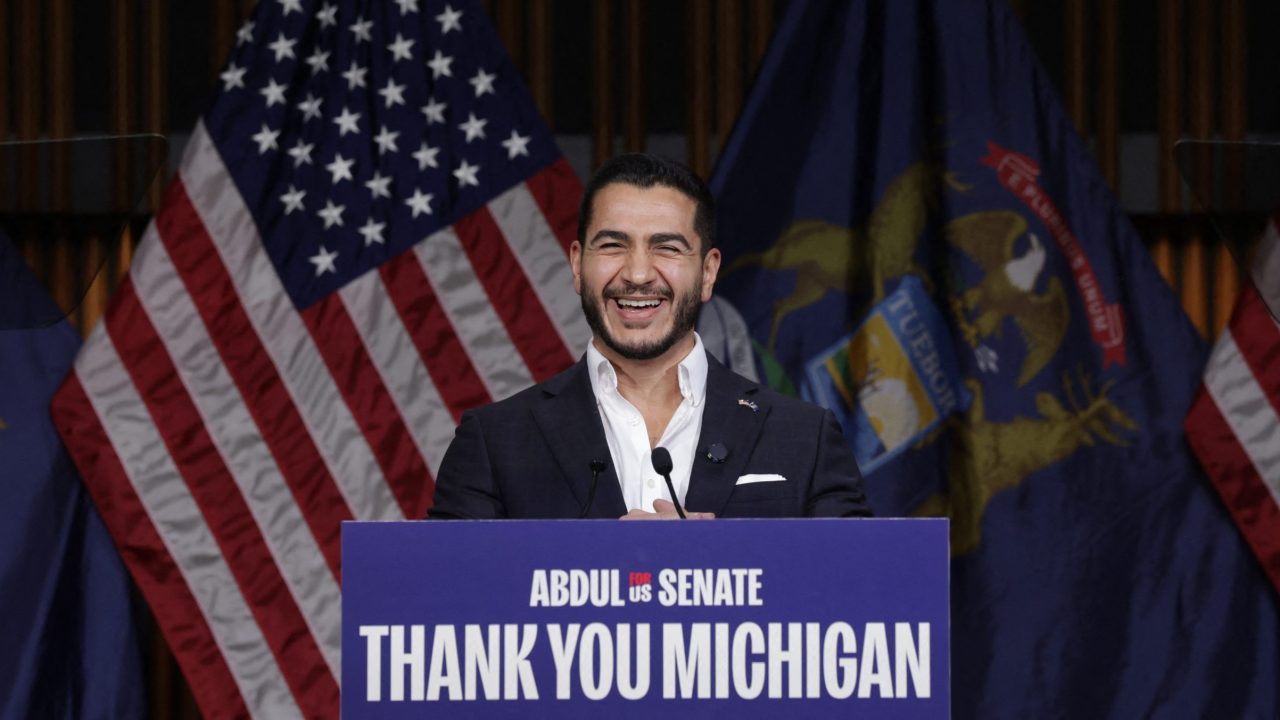
For the wave of new Democrats now headed to Congress, America’s Taiwan policy won’t be their first priority. It might not be their 20th.
By all accounts, this was an election about data centers, White House corruption and the spike in gas prices brought on by the Iran War. A distant strait might have been on the minds of many voters when they stepped into the ballot box, but it wasn’t the one between China and Taiwan.
So what does this result mean for Taiwan?
Last week, we wrote that Democrats’ desire to score political points against Trump might outweigh more substantive concerns about the region. And we speculated that the House Select Committee on the Chinese Communist Party might serve as their primary vehicle for doing so.
Michael Cunningham, a senior fellow with the China program at the Stimson Center, echoed that assessment in an email to Domino Theory earlier this week.
“Most of the new members of Congress won’t have a lot of foreign policy experience and frankly will be focused on other issues,” he said. “But, provided the China Select Committee remains, the Democrats would likely use the committee the way the Republicans used it during the Biden administration — as a vehicle to criticize the president as weak on China.”
When Democrats take office, China and Taiwan are bound to come up. The two countries interact too closely with the focus of this fall’s campaigns for them not to.
Corruption was a big issue. One of Trump’s most high-profile pardon recipients was Binance founder Changpeng Zhao (趙長鵬). One of his closest business mogul confidants is Nvidia CEO Jensen Huang. According to a recent New York Times investigation, U.S. intelligence assessed that Huang was rubbing shoulders with a Chinese spy, an assessment on which Trump declined to act.
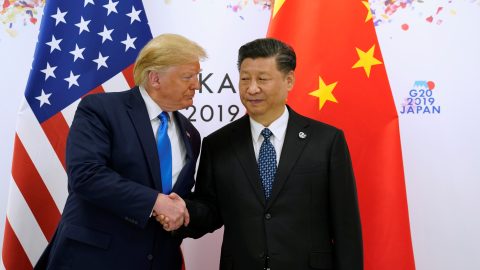
Trump’s personal affinity for authoritarian strongmen like Chinese leader Xi Jinping (習近平) has been a frequent attack line for Democrats over the past decade. Closely linked to this criticism is the perception that Trump has bullied Washington’s traditional allies, imposing steep tariffs while weakening security guarantees.
If Democrats in Congress are intent on highlighting these issues, the $14 billion arms sale to Taiwan that Trump has delayed for several months would be a natural place to start.
But this is where things get tricky for Taiwan. Had the Democratic majority that retook the House in 2018 had the chance to hammer Trump on his weak support for Ukraine, they probably would have.
This term’s majority will be different. Sprinkled among the practical, affordability-focused figures that delivered Democrats shocking victories in places like Kansas, Iowa and Texas was a more ideological breed of politician, one ultimately interested in reorienting the Democratic Party, not just providing a check on Trump.
For these Democrats, among whom the most prominent newcomer is Michigan senator-elect Abdul El-Sayed, there is only one foreign policy issue that really matters right now, and that is Israel.
Few people have a very good grasp of how the ascendant left wing of the Democratic Party thinks about China and Taiwan. (We explored a similar question about the Taiwan policy of America’s populist right wing last year, but two years of Trump still haven’t brought much clarity.)
The simplest answer is that the Democratic Socialists of America don’t think about China and Taiwan much at all. Alexandria Ocasio-Cortez, who fumbled a question about Taiwan pretty spectacularly earlier this year, certainly doesn’t.
But their intuitions about this part of the world are still worth trying to figure out, if you’re Taiwan. When DSA-adjacent politicians think about semiconductors, for instance, they’re more likely to be interested in the Micron union’s recent efforts to secure fairer compensation, not the importance of maintaining TSMC’s lead over Huawei.
When they think about Taiwan’s role in cross-strait relations, they might see the Democratic Progressive Party as a scrappy underdog, the sort of anti-colonial group familiar to them from the work of writers like Franz Fanon. They might wonder, though, how important the dispute really is, when both sides belong to the same ethnic group.
And they’re likely to be less receptive to appeals that draw a sharp contrast between Taiwan’s political system and the government in China. They’ll be tempted to respond: How great is capitalist liberal democracy anyway?
Taiwan’s usual playbook — casting itself as a champion of stability in the region, invoking the Six Assurances or the Taiwan Relations Act — might work. But it might not. El-Sayed certainly doesn’t view historical precedent as a compelling enough reason to continue American support for Israel.
The good news for Taiwan: When it comes to understanding America’s new left wing, its leaders have some time. The DSA is rising, but it doesn’t yet hold the sort of power that would prompt them to reshape foreign policy issues outside their wheelhouse.
But for a Taiwanese government that often struggled to connect with Trumpworld, the plan for building bridges to El-Sayed land should start today.




Leave a Reply