The Chinese government has arbitrarily detained more than a million Uyghurs in Xinjiang. It has used its growing navy to militarize the South China Sea and menace Taiwan. It has worked for years to export its model of digital authoritarianism to the rest of the developing world.
China was doing all these things long before Nvidia’s CEO Jensen Huang had ever heard the term “China Hawk.” “Apparently, if you’re a China hawk, you get to wear that label with pride, it’s almost like a badge of honor,” Huang said on the Bg2 podcast last week. “It’s a badge of shame. There’s no question it’s a badge of shame.”
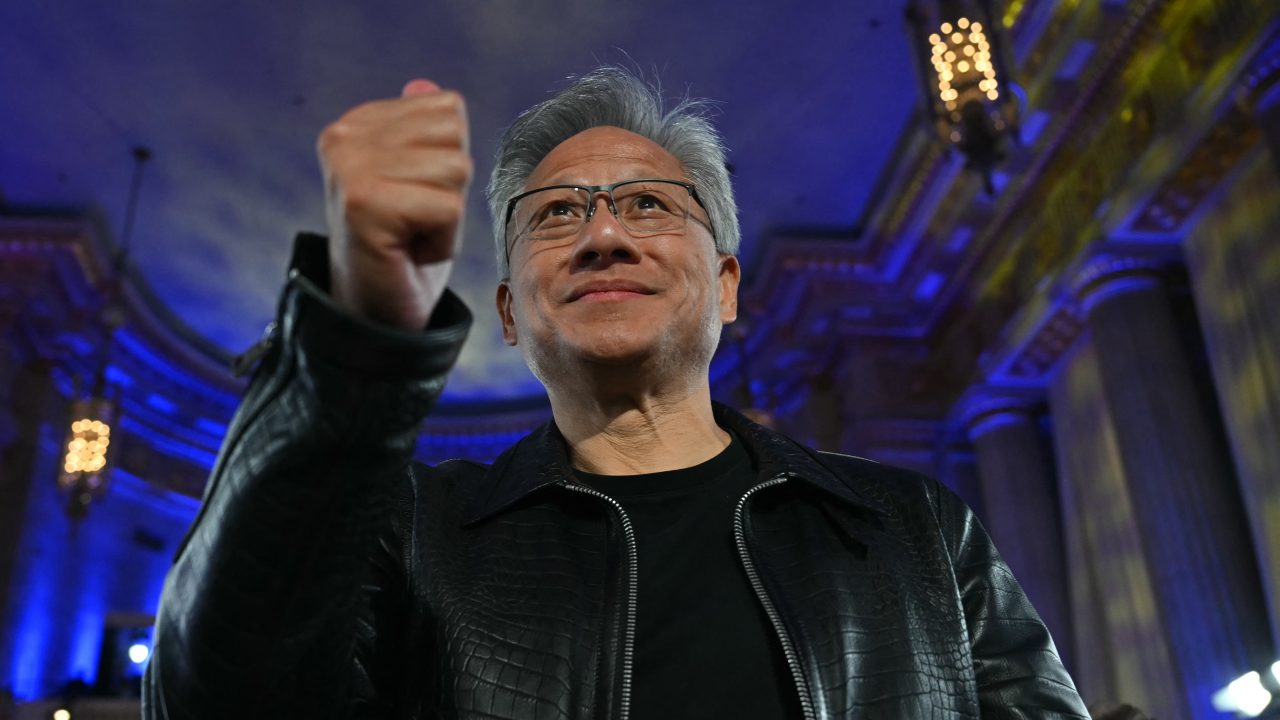
Huang’s comments were tantamount to carrying water for the Chinese Communist Party. Other U.S. billionaires like Tim Cook and Jamie Dimon might let their own business interests influence how they act toward China, but they’ve always stopped short of publicly auditioning for the Global Times editorial page. When Huang shows up in his leather jacket and red glasses, parroting the Politburo, the army of chronically online Americans who treat Nvidia earnings calls like the NFL draft will listen. And they won’t be alone.
There are two other factors that make Huang’s comments uniquely dangerous.
The first is that Nvidia’s business has the potential to reshape U.S.-China geopolitical competition in a way that Tim Cook and Jamie Dimon’s companies never could. During Trump’s first term, his administration seemed to recognize this. That’s why the export controls they pioneered applied to microchips, not iPhones.
Since then, AI has become even more essential to U.S.-China competition, and Nvidia has become the most valuable company in the world by monopolizing the design of chips that power AI. It is one of the last remaining critical technologies where the U.S. out-competes China. This makes Huang’s geopolitical outlook even more concerning.
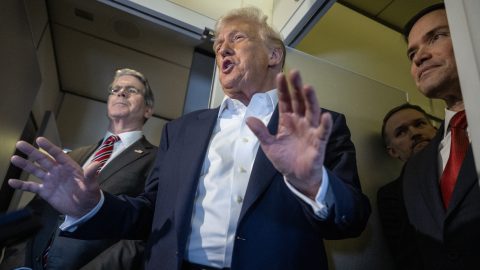
The second is that the Trump administration is vulnerable to the persuasions of wealthy CEOs. Elon Musk, whose SpaceX was just caught taking money directly from Chinese investors, has been the most visible example. But even though Huang didn’t run DOGE, he’s still shown an ability to use his personal relationship with Trump to shift U.S. chip policy.
In April, after the administration announced that it would extend Biden-era export controls on high-end AI chips to China, Huang started lobbying Trump behind the scenes. Three months later, and voila: The U.S. would let Nvidia sell its H20 chip to China. Now, it has a far more powerful version in the works, which experts say could erase the U.S.’s AI advantage altogether.
That success influencing Trump seems to have gotten to Huang’s head.
At some point in the last 20 years — maybe it was when Silicon Valley briefly convinced the world that their software would be an engine of human liberation, or maybe it was when rainbow-covered Bank of American floats began showing up at Pride parades — America started to look to its corporate leaders for guidance on moral and political questions.
In September, specifically citing geopolitical concerns, Anthropic announced that it would no longer sell its products in China. The move is admirable, but it’s also a red herring. There may be enough conscientious AI consumers to allow Anthropic to succeed, but it won’t eliminate their competitors’ financial incentive to maximize their user base. Greed might not be good, but we should accept that, when it comes to companies like Nvidia, greed is the default.
This might all seem like an overly pessimistic view. But it’s not. A clear-eyed assessment of the perspectives of men like Huang, and what role tech titans should be allowed to play in the political process, is essential to good policymaking.
Huang isn’t a politician. He doesn’t study U.S. foreign policy. He answers to Nvidia’s shareholders, who unequivocally stand to benefit from Huang’s efforts to open up the Chinese market for his chips. Huang, who told Bg2 that he didn’t hear the phrase “China hawk” until a few years ago, clearly hasn’t been thinking about U.S.-China competition for very long. But it’s not his job to be a moral authority. It’s not his job to be a political authority. He shouldn’t be shaping the U.S.’s tech policy toward China. How did any of us lull ourselves into thinking otherwise?




Leave a Reply