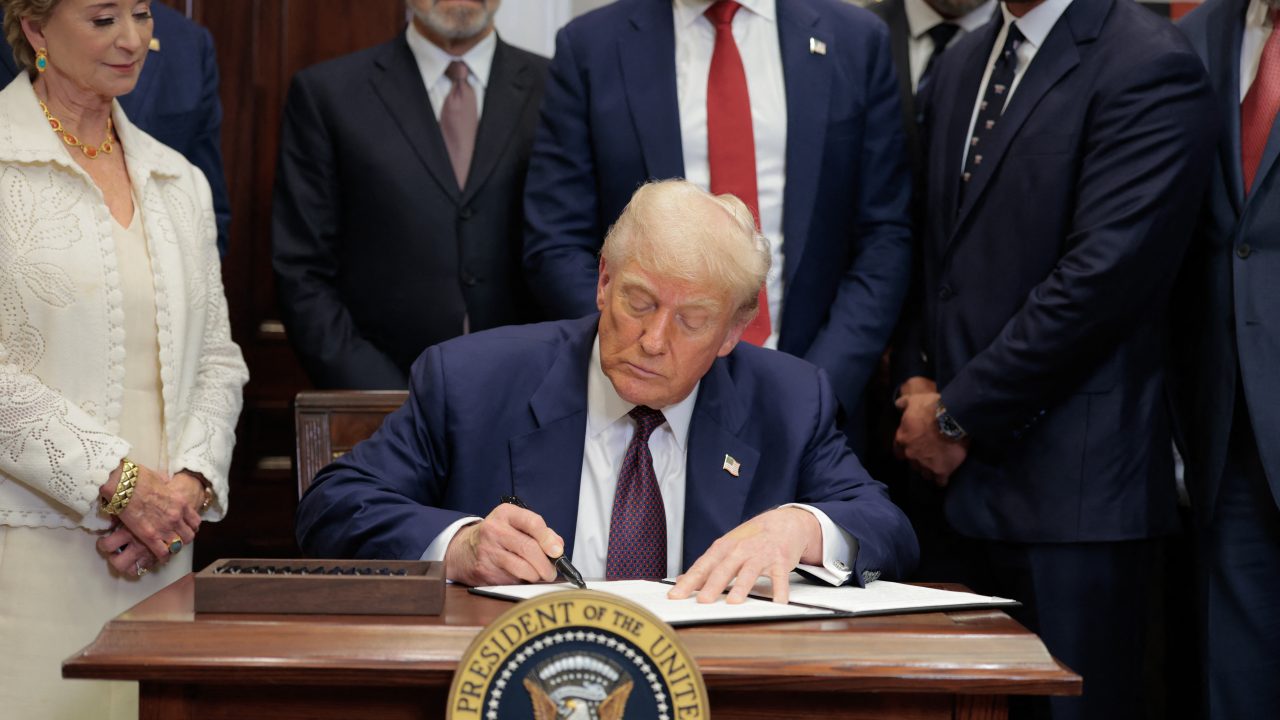
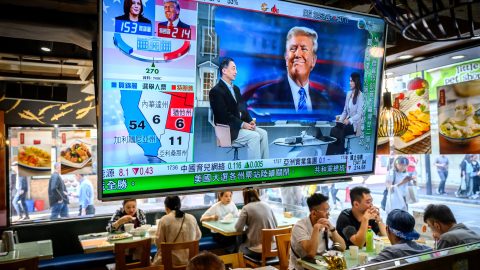
On Thursday, U.S. President Donald Trump announced a 20% reciprocal tariff on Taiwanese goods. Taiwan’s presidential office has clarified that this rate is temporary, and subject to reduction once a final agreement is reached.
Even though this number is 12 points lower than the initial 32% reciprocal tariff that Trump imposed on Taiwan in April, a 20% tariff could significantly impact Taiwan’s GDP. In a grim irony, the U.S. edged out China as Taiwan’s top export destination for the first time in 24 years in February. And competing economies in East Asia, namely Japan and South Korea, received lower tariff rates. Still, experts think the 20% rate is a “relatively favorable” outcome for Taiwan.
Masson Li (李鎮宇), Chief Economist at Taishin Holdings, told Domino Theory that the 20% tariff is “better than expected.” Li also hinted that Taiwan can still leverage its role in the global semiconductor supply chain to get a more favorable tariff rate. “Taiwan hasn’t played all our cards yet.”
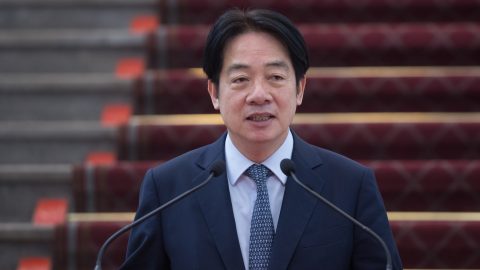
What remain to be seen are the concessions that Taiwan’s executive branch, led by the Democratic Progressive Party’s (DPP) Lai Ching-te (賴清德), had to make in order to lower the tariff rate. In an opinion piece published by Bloomberg in April, Lai outlined several potential concessions that Taiwan could offer to the U.S. This included procuring more American goods (such as arms and energy), making new investments into the U.S., cutting Taiwan’s tariffs on American goods (such as autos and food products), removing non-tariff trade barriers and curtailing the illegal transshipment of Chinese goods through Taiwan.
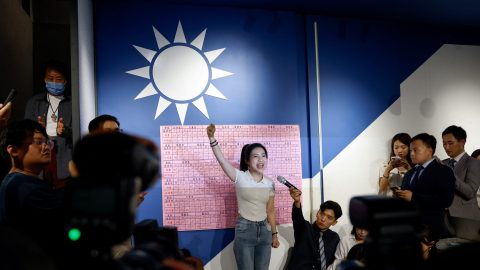
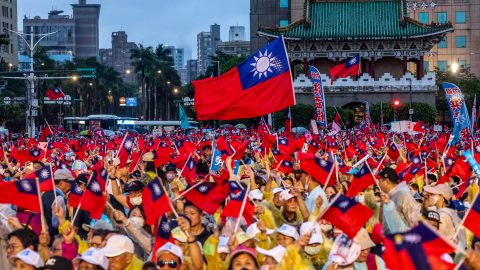
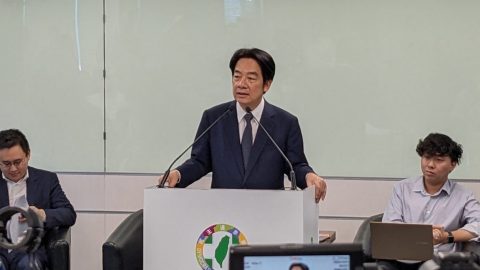
Since Lai wrote that op-ed in April, Taiwan’s domestic politics have experienced substantial tumult. This week, in particular, has been extraordinarily tough for Lai. All 24 Chinese Nationalist Party (KMT) legislators who were put up to a recall vote last Saturday held onto their seats, solidifying the KMT-Taiwan People’s Party coalition majority in the Legislative Yuan until the next election in 2028. This was a major setback for the DPP, which was hoping for a switch up that could restore their control of the legislature.
Following the KMT recall elections, many have predicted intensified gridlock in the legislature. Experts told Domino Theory on Sunday that these results could be affirming and even emboldening for the KMT. The question now is, how will entrenched partisanship in Taiwan shape the reaction to and implementation of the tariff agreement with the U.S.?
With Trump on one side and the opposition-controlled legislature on the other, the DPP is “caught between a rock and a hard place,” said Jung-hsiang Tsai (蔡榮祥), a professor and expert in comparative politics at National Chung Cheng University. Indeed, additional budgetary commitments and changes in the law, including permanently reducing the tariff rates, would likely require legislative consultation and approval. The executive branch might have some room to maneuver independently in reducing non-tariff barriers if it can alter administrative procedures.
“[The KMT] can block or delay agreements that involve perceived concessions to the U.S., especially in politically sensitive sectors like agriculture and the auto industry,” said Tsai, referring to a suspicion that the tariff agreement will include a promise from Taiwan to lower its tariffs on autos and agricultural products. Taiwan’s tariffs on autos are currently 17.5%, while the average nominal tariff rate on agricultural products is 15%.
These tariff rates are elevated for a reason, and attempting to lower them will be a political challenge. For example, the KMT has strongly opposed the import of American pork, due to public health concerns surrounding ractopamine, a feed additive sometimes used in the pork industry. As for the auto industry, Tsai says that lowering Taiwanese tariffs is going to be “a disaster” for domestic automakers. Howard Chang (張明皓), Sales Director at Fortress Auto in Taiwan, added that heightened tariffs on Taiwanese goods increases costs for U.S. importers, in turn putting “pressure on us to offer more competitive pricing. In the long term, this will materially affect our gross margins.”
If arms procurement and defense spending are a part of the deal, it’s not clear how the KMT would respond. Although the KMT-dominated parliament caused a stir when it froze defense spending earlier in the year, by June, most of these funds were unfrozen. In July, the KMT agreed to allocate an additional NT$150 billion budget for whole-of-society defense resilience, despite being initially opposed. The mainstream party line currently embraces the “2D” strategy: national defense and cross-strait dialogue. During the budget controversy earlier in the year, the KMT said it supports “moderately and effectively” increasing defense spending.
If preventing the illegal transshipment of low-cost goods through Taiwan is part of the deal, KMT-endorsed legislation could complicate this. In April, KMT members proposed legislation to create a free trade zone with China on Taiwan’s outlying islands. DPP legislators warned that this could become a “backdoor” for Chinese companies trying to evade U.S. tariffs.
In terms of strategic messaging, the KMT has been riding a non-stop wave of political wins this week. KMT Chairman Eric Chu published a statement this morning deriding the DPP for a “lack of a clear strategic direction” in tariff negotiations with the U.S. Earlier, Chu said that Lai needs to “sincerely apologize to the people of Taiwan” for diverting attention away from the tariff negotiations to promote the KMT recall elections, which he characterized as “partisan catfights.”
A particular pain point for the DPP’s image right now is that these tariffs are being characterized by the opposition as running contrary to the close and positive relationship with the U.S. that the DPP touts. “The DPP authorities have always stood by the U.S. side and fully cooperated. Yet, the tariff pressure on Taiwan remains enormous. Clearly, in the eyes of Washington, Taiwan is not seen as an ally, but rather an easy target to exploit for profit,” said KMT lawmaker Hsu Chiao-hsin (徐巧芯).
If Taiwan is compelled to promise more investment into the U.S. as a part of this tariff agreement, this will likely add fuel to the fire, especially since TSMC already pledged to invest an additional $100 billion to expand its production of semiconductors in the U.S. China has already seized on this critique. “The DPP authorities have willingly traded away the island’s core strategic industries in pursuit of ‘Taiwan independence,’” said Zhu Fenglian (朱鳳蓮), spokesperson for the Taiwan Affairs Office of China’s State Council in April. “In return, Taiwan now faces high tariffs imposed by the U.S., which has shattered the illusion of a so-called solid U.S.-Taiwan relationship. Taiwan has gone from being a pawn to a discarded piece.”
While painting the DPP as incompetent, the KMT can then swoop in like heroes by passing legislation to ease the burden of the tariffs. Indeed, the KMT promised this morning to pass measures that will “revitalize industries and boost consumption.” Their statement also mentioned the importance of the NT$10,000 universal handout that was passed last month, which some have criticized as an attempt to curry favor ahead of the recall elections.
Interestingly, Eric Chu shoe-horned a paragraph on the upcoming nuclear referendum into the end of his statement about the tariff agreement. The KMT might try to use their momentum to generate support for the referendum, which is up for a public vote on August 23. Nuclear energy is a highly partisan issue in Taiwan, and the KMT hopes to restart the Maanshan Nuclear Power Plant.
Managing domestic reactions to the tariff agreement and facilitating its implementation could be an uphill battle for the DPP and Lai, whose approval rating is down ten percentage points this week.
“For foreign affairs, you need to speak with one voice,” said Tsai from National Chung Cheng University. “But that’s not the case in Taiwan. Always, there’s a power struggle between the KMT and the DPP.”
Leave a Reply