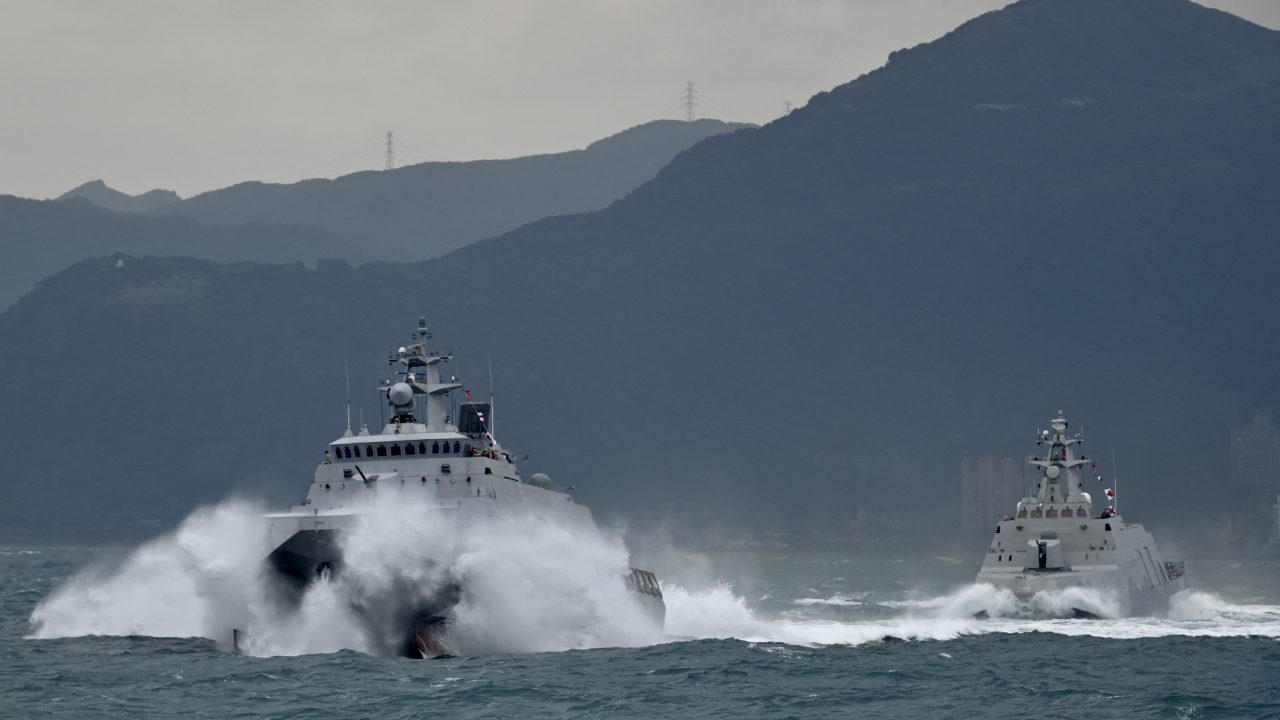
Last week, Domino Theory reported on the implications of Taiwan’s new frigate programs. Two new indigenously developed classes of frigate are now either under construction or reported to be in development.
What is seen there, that older American ships will be replaced by newer Taiwanese-built ones, is representative of a much wider trend. Over the past five years, multiple major classes of vessel have gone into production in Taiwan. They will be the face of the navy for decades to come, representing the country at home and abroad, on the high seas and under them.
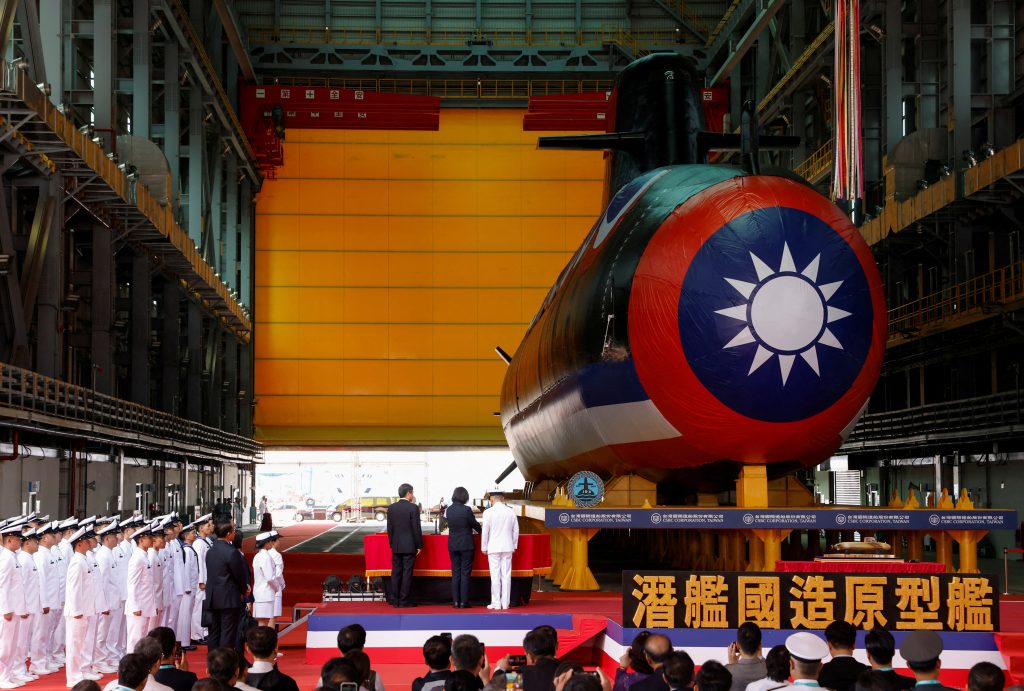
Taiwan unveiled its first domestically produced submarine, the Hai Kun (海鯤), in September 2023, drawing global attention. Taiwan currently operates four submarines, two from the U.S. of World War II vintage and two Zwaardvis-class subs purchased from the Netherlands in the 1980s. Submarine expert HI Sutton describes the Hai Kun’s hull as being based on the Zwaardvis class.
There are relatively few countries that can build their own submarines. Taiwan received a lot of quiet international support for the Hai Kun project, but it still represents an important achievement. Even though submarines are intended to be unseen, the Hai Kun is a highly visible representation of Taiwan’s modernizing capabilities.
However, the Hai Kun class also omits modern technologies that are now standard on new submarines, such as a vertical launch system for anti-ship missiles. It also appears to lack air-independent propulsion, which allows non-nuclear submarines to stay submerged for much longer than diesel engines alone can.
Taiwan plans to build eight Hai Kun-class subs, at the CSBC (台灣國際造船) shipyard in Kaohsiung. No immediate plan to retire the two Zwaardvis boats has been announced.
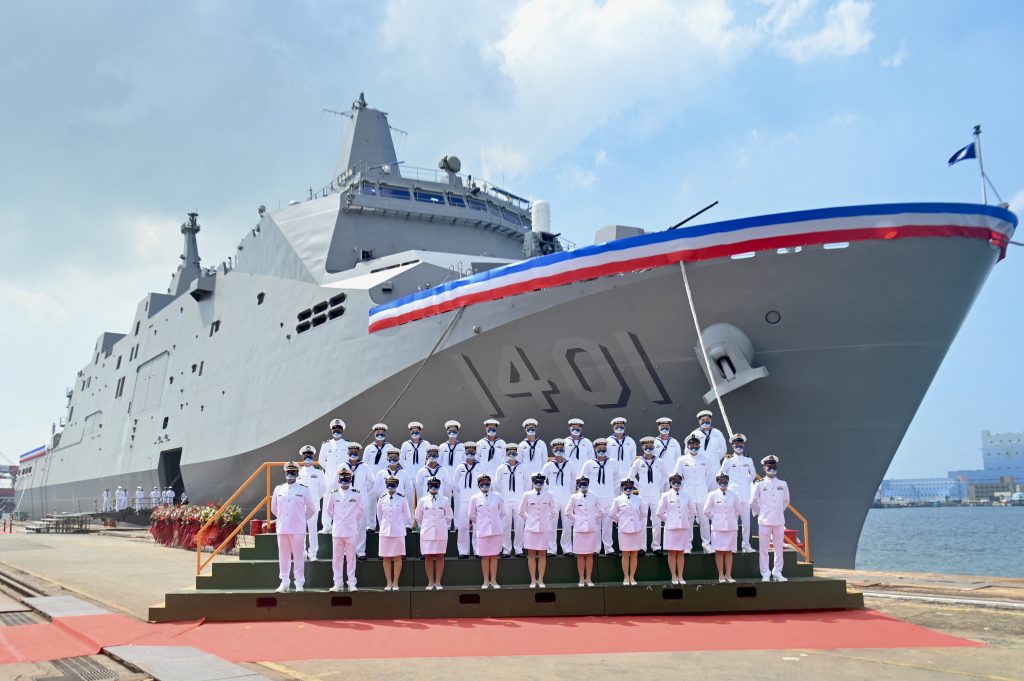
Taiwan launched the Yushan (玉山) amphibious transport ship in 2021, also from the CSBC yard. It was commissioned in 2023. The ship displaces 10,000 tons, meaning that its class will be the largest non-support ships in the Taiwanese navy once the older U.S. amphibious vessel it is replacing retires.
Taiwan has been criticized for building a ship that people associate with attacking islands, not defending them, but in an informative X thread, defense analyst Ben Lewis wrote that “Amphibious transport ships are the most effective way for Taiwan to transfer personnel and equipment in large quantities between its islands in peacetime and wartime.”
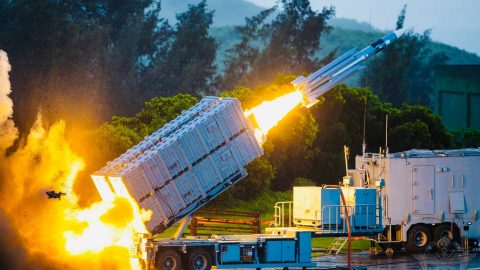
The Yushan is more heavily armed than is typical for an amphibious warfare ship, with anti-ship missiles and surface-to-air missiles for defense, as well as a large 76mm main gun. In addition to transportation, it could serve as a “mothership” for smaller vessels like minelayers.
ROCS Yushan has been a big hit with the public. During an open day I attended in Kaohsiung in November, there were long queues of people to tour the different decks. 10,000 tons is not that large compared to other comparable vessels, but it felt pretty big up close!
Another ship that was on display at the quayside that day in Kaohsiung was the ROCS Ta Chiang (塔江). The Ta Chiang is the second of its class and was commissioned in 2021. The first, the Tuo Chiang (沱江), was commissioned seven years earlier in 2014, but numerous issues with it delayed the introduction of the class.
The Tuo Chiang class are corvettes, warships that are smaller than frigates with limited range but that still pack a punch in terms of offensive and defensive capabilities. The Tuo Chiangs are also catamarans, with two hulls intended to give them more stability in the rough waters of the Taiwan Strait.
In peacetime the corvettes can conduct most naval missions in the littoral waters around Taiwan. In war they would be tasked with delivering large numbers of anti-ship missiles against Chinese warships, relying on their small size, high speed and low radar visibility as well as their own air defenses.
Twelve Tuo Chiang-class ships will be built by Lungteh Shipbuilding Co (龍德造船), but in a conflict their number would be supplemented by the 12 Anping-class offshore patrol vessels of Taiwan’s Coast Guard. The Anping-class has the same hull as the Tuo Chiangs, but without the offensive weapon capability. It is being built by Jong Shyn Shipbuilding Company (中信造船). However, the space for those anti-ship missiles is still there.

At the launch of the latest Anping class, the Yong Kang (永康), Vice President Hsaio Bi-khim (蕭美琴) said the government has pledged to spend $1.31 billion in building 141 ships of six different types for the Coast Guard Administration between 2018 and 2027.
It is not reported that she mentioned the number of navy ships to be built domestically in the same period, but as this article and the previous one have shown, all new vessel classes under construction are domestically built, and there are no announced outstanding purchases from the U.S. or other countries.
Future writing will truly unpick the implications of this change in Taiwan’s naval procurement, but at the very least it means that Taiwanese leaders and admirals have more control over what is commissioned into the fleet they command.






Leave a Reply