
This roundup details TSMC’s compliance issue with U.S. chip sanctions on China and Elon Musk being asked to disable Starlink services over Taiwan by Russian President Vladimir Putin as a favor to Xi Jinping.
Semiconductors
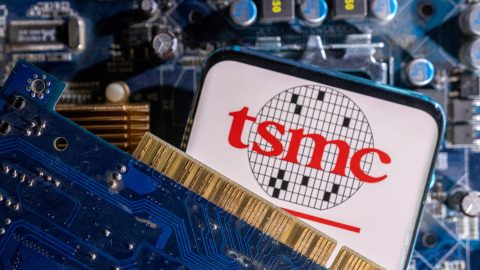
Weeks after one of Taiwan Semiconductor Manufacturing Co.’s chips was found in an AI processor made by Chinese tech giant Huawei, the U.S. Department of Commerce has ordered the company to halt shipments of advanced chips to China. U.S. chip sanctions do not forbid the sale of all chips to China, but the most powerful chips are not allowed to be sold to Chinese customers. In a statement, TSMC said it was pausing sales of advanced chips to China while it reviews orders to make sure it complies with regulations.
TSMC is planning to build more semiconductor plants inside Europe, to add to the plant it has already begun construction on in Desden, Germany, according to a senior Taiwanese official. Taiwan’s National Science and Technology Council Minister Wu Cheng-wen (吳誠文) said no timeline has been agreed on the next round of new plants.
TSMC says it expects to pay more for energy in Taiwan than it does anywhere else after a series of price increases. “Basically, the price has doubled in the past few years. So next year, we think that [the] electricity price for us in Taiwan will be the highest in all the regions that we operate,” Wendell Huang (黃仁勳), TSMC’s chief financial officer, told investors in October.
Taiwan’s Passive System Alliance, which began production of integrated circuits in Malaysia’s Penang in September, is expanding operations to Malaysia and Japan as part of a growing demand from clients for supply chain resilience.
Intel’s CEO lost the company a 40 percent discount on TSMC products by repeatedly making remarks about Taiwan’s lack of stability after taking over in 2022, according to four sources Reuters spoke to.
Space Industry
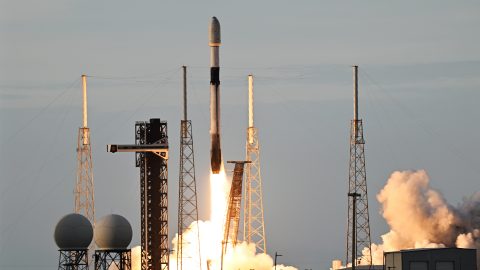
Elon Musk’s SpaceX has asked Taiwanese companies supplying its operations to transfer manufacturing away from Taiwan due to geopolitical risks, according to a report from Reuters based on two anonymous sources.
At the end of October it was revealed that Elon Musk has been in regular contact with Russian President Vladimir Putin since 2022, and that Putin has previously asked Musk to disable Starlink internet services over Taiwan as a favor to Chinese President Xi Jinping (習近平). In response, Taiwan’s Ministry of Digital Affairs said it was open to international satellite companies who want to provide internet services over Taiwan.
Taiwan has acquired 24-hour access to backup internet services from European provider Eutelsat OneWeb. Initially, the coverage will come through ground stations located in Japan, Guam and Thailand, but Taiwan’s government plans to have 700 domestic ground stations up and running by the end of the year.
AI
Swiss business school the Institute for Management Development has ranked Taiwan ninth in the world for “digital competitiveness” in its annual rankings. They are designed to demarcate “the extent to which countries adopt and explore digital technologies leading to transformation in government practices, business models, and society in general.”
Computing
U.S. computer giant HP is reportedly laying off 20 to 30 Taiwan-based employees in its research and development department. The move is thought to be a part of a “Taiwan+1” strategy designed to mitigate geopolitical risks, which will involve a gradual shift toward South and Southeast Asia.
The pagers which exploded in Lebanon, killing dozens and injuring many more, were not made in Taiwan, according to Taiwanese prosecutors who have investigated the incident. A statement said Taiwanese company Gold Apollo licensed the use of its brand to the firm Frontier Group Entity, which manufactured, traded and shipped them before they were used in an Israeli attack on Hezbollah.
Green Transition
Taiwan’s Premier Cho Jung-tai (卓榮泰) has said his government is open to a “public discussion” on reviving nuclear power in Taiwan. “As long as there is a consensus within Taiwan on nuclear safety and a good direction and guarantees for handling nuclear waste, with this strong consensus, we can have a public discussion,” Cho said, referring to what he called “new nuclear technologies.” Taiwan currently has only one active nuclear power plant, having shut down its others.
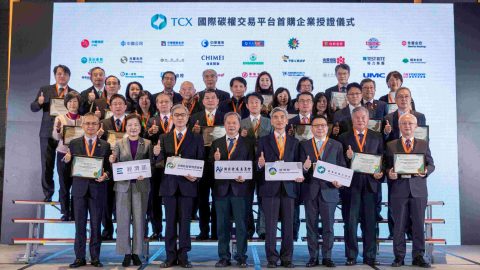
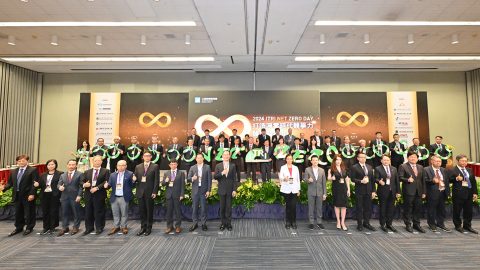
Taiwan’s carbon fee will come into effect on January 1, 2025. The rate will be up to $300 New Taiwan dollars ($9.31) per metric ton of carbon emissions, according to the Ministry of Environment, although lower rates will apply to those who hit certain emissions targets. Initially the fee will only apply to companies emitting over 25,000 metric tons annually. That’s around 500 companies.
Renewables will account for over 20 percent of Taiwan’s energy mix by the end of 2026, according to Lee Chun-li (李君禮), deputy director general of the Ministry of Economic Affairs’ Energy Administration. Total emissions remain a problem as AI drives additional demand, though, with Minister of Environment Peng Chi-ming (彭啟明) saying in August that emissions had only reduced by 1.8 percent between 2005 and 2022. Peng said reaching the goal of reducing emissions by 23 percent to 25 percent compared with 2005 by 2030 would “in reality be hard.”
Medical Tech
A Taiwanese team has developed light field augmented reality (VR) display technology for smart medicine. It addresses problems with dizziness and depth perception for doctors using VR headsets which reconstruct organs, vital blood vessels and nerves for training, diagnosis and treatment.
Leave a Reply