American workers sit at sweatshop benches struggling to sew clothes. In an AI-generated video on Tiktok.
On Instagram, a Chinese influencer tells his audience he owns nothing made in America and asks “Do you have something from China in your home?”
For over a month, Chinese netizens and media have been fiercely defiant and even exultant about the U.S.-China trade war, telling the world that Trump’s tariffs are not affecting them.
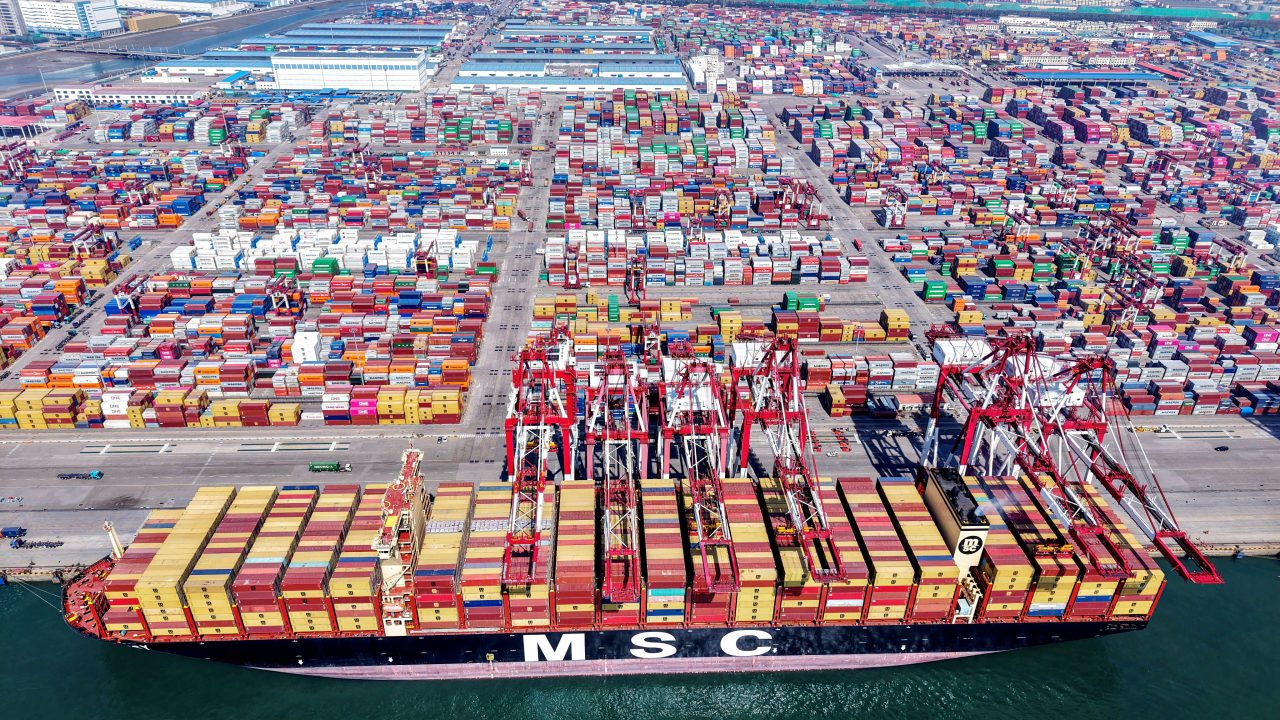
On the other side of the Pacific, U.S. media heavily featured news of how badly businesses would be affected by their loss of Chinese imports. It reported a dramatic climbdown from the American side, when the Trump administration announced that global tariffs would “drop” to 10%, and that even though tariffs on China would remain at 145%, crucial imports from China would be exempt. Think pieces discussed how China could win the trade war.
Chinese officials said they didn’t want to fight but are not scared to, after China raised its own tariffs on American goods to 125%.
China would only talk to the U.S. after Washington removed the tariffs it had imposed on Beijing. It was a matter of respect.
But this weekend, despite U.S. tariffs remaining in place, Chinese Vice Premier He Lifeng (何立峰) will conduct trade discussions with U.S. Treasury Secretary Scott Bessant in Geneva.
In other words, China blinked.
There was another side to the trade war, one that received far less attention. China media did not discuss the negative impacts that the tariffs were beginning to show domestically.
International media did. “Our export orders disappeared so we’ve temporarily stopped,” a 28-year-old plastics factory worker in Fujian told the Financial Times, in a story full of accounts of factories dropping or suspending production and sending workers home.
At the end of April, China quietly started to ask firms to identify critical goods that they needed to import from the U.S., so that it could selectively remove the tariffs on them. It followed this up by circulating a “whitelist” of exempt goods.
These reports were, at least in large part, missing from Chinese media. This information asymmetry has helped to guide the perception that China has been completely bulletproof against Trump’s new trade war. A perception whose groundwork was laid by the early American retreat.
The U.S blinked, too. Arguably, Washington has blinked many times since the tariffs were first announced.
But things in the Chinese economy are not quite as rosy as they were painted to be, and Beijing is probably hoping to get some level of exports to the U.S. flowing again.
In 2022, China’s zero Covid policies ended abruptly after a fire in Xinjiang killed at least ten people. Chinese authorities denied that lockdown rules had hampered rescue efforts. But thousands filled the streets across the nation in the white paper protests, and the government completely folded, lifting restrictions immediately rather than in any kind of controlled or premeditated way.
China is no stranger to blinking. It just doesn’t like to talk about it.




Leave a Reply