Semiconductors
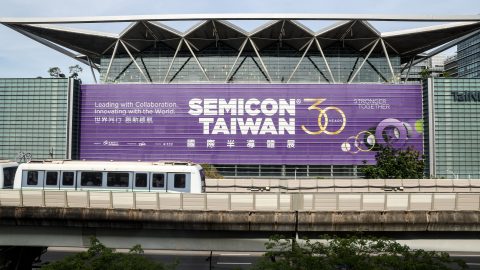
Taiwan’s vice premier, Cheng Li-chiun (鄭麗君), denied earlier this month that Taiwan agreed to shift half of its U.S.-bound chip production to American soil after U.S. Commerce Secretary Howard Lutnick said he floated the idea with Taiwanese negotiators. The Trump administration is concerned about the U.S.’s outsized reliance on Taiwan for semiconductors, which underpin nearly all modern technology, from household appliances to fighter jets. Nonetheless, Taiwan “never made any commitment to a 50-50 split on manufacturing chips, and would not agree to such terms,” Cheng said.
Cheng did apparently talk to American negotiators about expanding Taiwan’s investment in the U.S. based on a “Taiwan Model,” which would not entail a relocation of supply chains. Despite Cheng’s assurances, the negotiations have stoked fears about the erosion of Taiwan’s silicon shield, or the idea that Taiwan’s central role in the global semiconductor supply chain lends it strategic protection.
Taiwanese negotiators met again with their American counterparts on the sidelines of APEC in South Korea, but details from this meeting have not yet emerged.
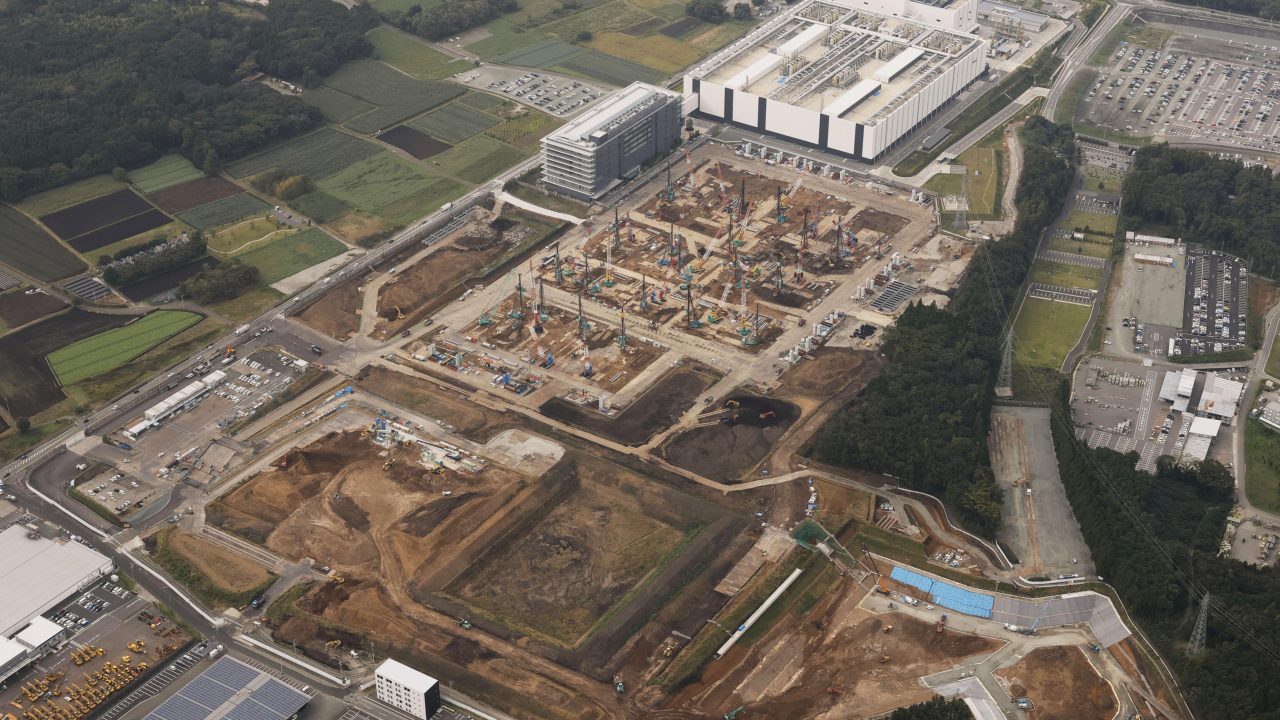
In other semiconductor news, TSMC continues to expand at home and abroad. At an investor conference on October 16, CEO C.C. Wei (魏哲家) said that the chipmaker will speed up its buildout in Arizona. TSMC also signed an agreement this month to build a second fab in Japan, which will begin manufacturing 6-nanometer technology in December 2027. In Taiwan, TSMC secured construction permits for its new A14 chip fab in Taichung this month and will start construction soon, said Wang Chun-chieh (王俊傑), deputy director general of the Central Taiwan Science Park Bureau. This 1.4 nanometer chip is slated for mass production in 2028.
Taiwan’s economic ministry said China’s new rare earth curbs, introduced earlier this month, will not impact semiconductor production. The five rare earths China added to its list of controls play a bigger role in the drone and electric vehicle supply chains than they do in the chip supply chain. Likewise, a senior vice president at TSMC said that the company has one to two years of rare earth supplies, and is not concerned about any short term impacts that could arise from these controls.
The medium and long-term supply of rare earths may still be a concern if China continues to restrict access. But as Chris McGuire, a Biden-era national security official, said on the ChinaTalk podcast, China’s leverage against a company like TSMC is limited when it comes to enforcing these controls. “Are they [China] going to say, ‘Sorry, TSMC, your products are no longer welcome in China?’ I don’t really think so. That’s a very empty threat, and obviously, that would cause more pain.”
The Taiwan Semiconductor Industry Association issued a public warning about energy shortages in Taiwan that could jeopardize its role as an AI data center supply hub. Taiwan’s economic ministry projected electricity demand to grow at a rate of 1.7% each year for the next ten years, although some said this number was unsubstantiated and too low. Meeting growing energy demands will require new installed capacity, particularly for natural gas and renewables.
Defense and Space Technology
Taiwan’s biennial defense report, released on October 9, said China is ramping up military activity around Taiwan, adopting “routine gray zone harassment tactics, combined with joint combat readiness patrols, targeted military exercises and cognitive warfare.” The report detailed China’s use of AI to find and target vulnerabilities in Taiwan’s critical infrastructure, as well as Taiwan’s acquisition of unmanned systems and other defense tech, like the M1A2T main battle tank and HIMARS multiple-launch rocket systems, which are driving Taiwan’s military modernization.
The U.S. is expected to expedite transfers of defense tech to Taiwan via forthcoming revisions to defense and state department guidelines, Rupert Hammond-Chambers, head of the U.S.-Taiwan Business Council, said at the U.S.-Taiwan Defense Industry Conference last week. At the same conference, Chung Shu-ming (鍾樹明), deputy minister of armaments in Taiwan’s Ministry of National Defense, said that U.S. delays in arms deliveries “are gradually being resolved.” That being said, Air Force chief of staff Lee Ching-jan (李慶然) told Taiwan’s parliament this month that Taiwan will not receive all 66 F-16 Block 70 fighter jets by the end of 2026 as scheduled due to manpower shortages and supply chain disruptions.
During his National Day speech on October 10, President Lai Ching-te (賴清德) announced Taiwan’s plan for a new multi-layered defense network that will “weave a safety net for Taiwan to protect the lives and property of citizens.” The system, dubbed “T-Dome,” was inspired by Israel’s Iron Dome, which has been in operation since 2011, and the U.S.’s recently announced Golden Dome. It will enhance Taiwan’s asymmetric capabilities against China’s better equipped military by leveraging speed and coordination across defense layers like missile interception, early-warning systems and hardened shelters.
Formosat-8, Taiwan’s first domestically developed optical remote sensing satellite constellation — a group of satellites that collect images and data about earth’s surface — was shipped to the U.S. earlier this month. 84% of its components were designed and manufactured in Taiwan.
Artificial Intelligence
President Lai announced 10 new AI initiatives to expand investment in quantum technology, silicon photonics and robotics, and diffuse AI across Taiwan’s economy. Lai said this group of initiatives will help build a chain of “guardian mountains,” signaling the role he hopes AI will play in Taiwan’s national security. The government will begin allocating budgets for these initiatives next year.
AI demand continues to drive trade and economic growth in Taiwan. Despite worries about the impact of U.S. tariffs, Taiwan’s export orders for the month of September grew 30.5% year-on-year to $70.22 billion, according to the Ministry of Economic Affairs. TSMC said that it expects chip sales to grow 35% in 2025. The Chung-Hua Institution for Economic Research raised its projected GDP growth rate for Taiwan in 2025 to 5.45% from 3.05%, citing demand for AI-related products.



Leave a Reply