Semiconductors
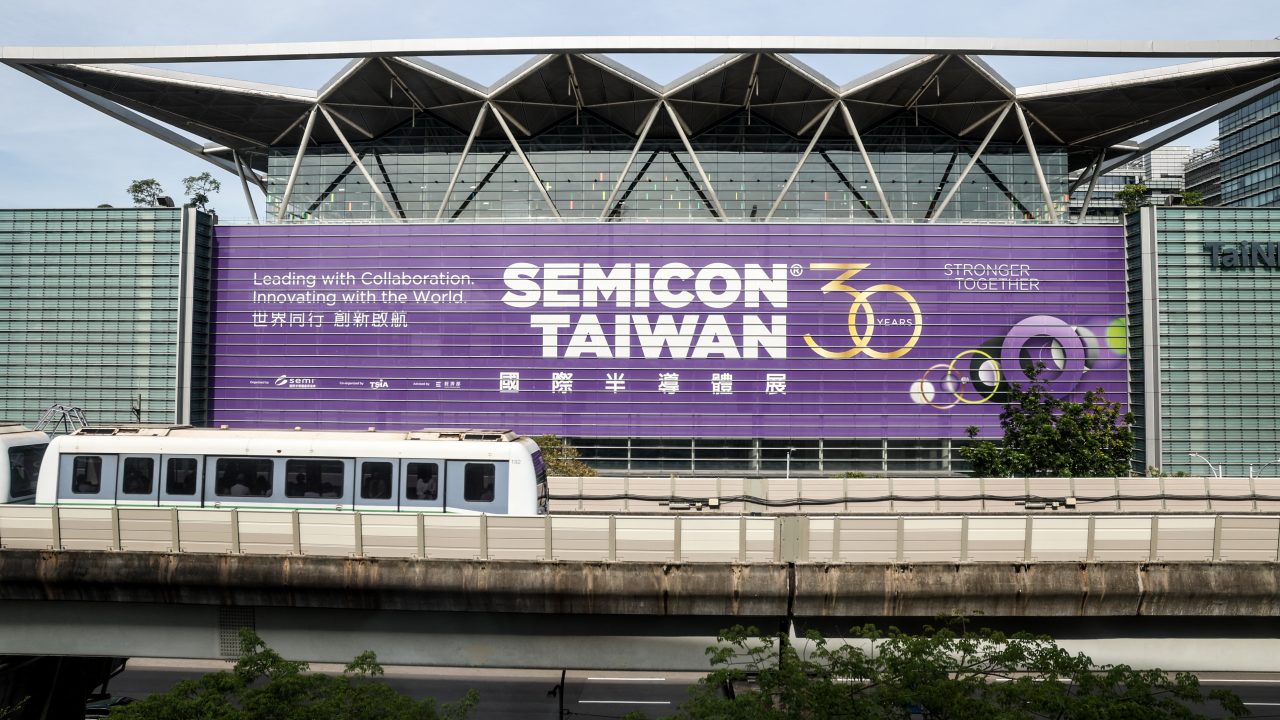
At this year’s Semicon exhibition in Taipei, which attracted record numbers of participants, “chip diplomacy” was a major focus. Trade and technology officials from Europe, India and elsewhere were in attendance. Minister of Foreign Affairs Lin Chia-lung (林佳龍) told an event held on the sidelines of Semicon: “We firmly believe that only by working with Taiwan can the free world create trusted non-red supply chains.” The “non-red” supply chain is a strategic vision promoted by President Lai Ching-te’s (賴清德) administration to reduce reliance on China by building supply chains across democratic societies.
While Taiwan is no stranger to leveraging its semiconductor industry to boost its diplomatic profile, in an unusually assertive move this month, Taiwan restricted chip exports to South Africa after the country downgraded and renamed Taiwan’s representative office in Pretoria. Taiwan suspended the curbs a couple of days later, after South Africa reached out to discuss the issue.
Taiwan’s fertility rate is holding steady in Hsinchu, while it falls everywhere else in Taiwan. As the hub for Taiwan’s semiconductor industry, childcare perks and high salaries in Hsinchu factor into this anomaly, Rest of World found.
September was a busy month for semiconductor giant TSMC, which widened its lead over Samsung as the world’s biggest semiconductor foundry in the second quarter. At the beginning of the month, the U.S. revoked TSMC’s authorization to freely ship chipmaking equipment to its fab in Nanjing, China. TSMC will now require a licence to keep those facilities operational. Amid speculation that TSMC halted construction on its new fab in Chiayi to accelerate construction in Arizona, TSMC said that its investment plans in Taiwan remain “unchanged.” TSMC also dismissed a report from The Wall Street Journal that Intel is seeking partnership with TSMC.
Last week, U.S. Treasury Secretary Scott Bessent urged diversification away from reliance on Taiwan for semiconductors, calling it the “world’s biggest single point of failure.” Commerce Secretary Howard Lutnick said on Saturday that a U.S.-Taiwan semiconductor deal is “coming pretty soon.” The goal is for domestic chipmaking to supply 40% of the U.S.’s semiconductor demand, Lutnick said, echoing Bessent’s concern about Taiwan’s geopolitical vulnerability.
Defense Tech
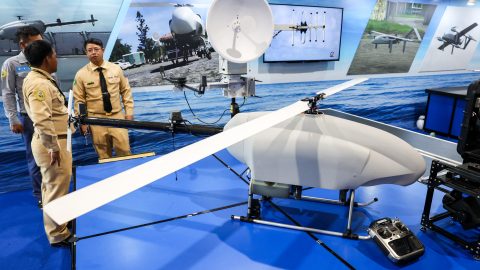
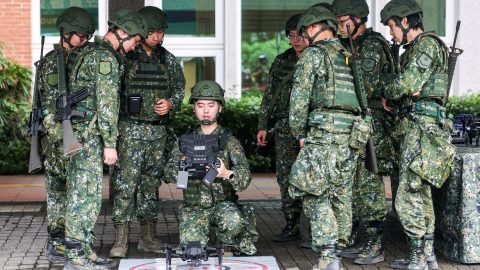
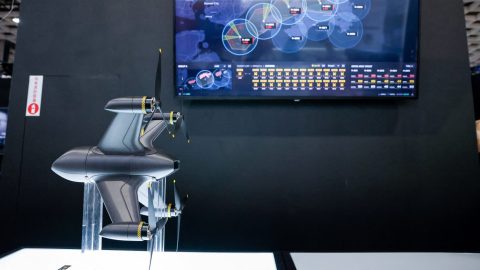
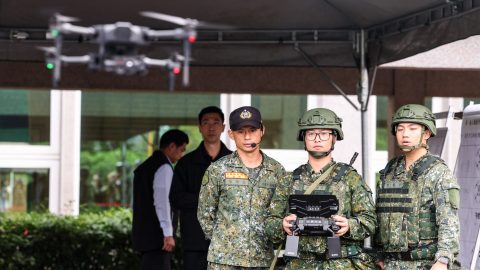
The Taipei Aerospace & Defense Technology Exhibition ran from September 18 through September 20. Domino Theory was on site to cover the most interesting technology on display, including air-breathing drones, mine-laying ships and the “Microsoft Office” of drone coordination.
Drones featured heavily. The Ministry of National Defense displayed 19 types of uncrewed systems, including the Mighty Hornet III, which targets battle tanks and amphibious assault vehicles. Also on display was Anduril’s Barracuda 500, a low-cost autonomous drone designed for mass production and large-scale deployment.
Companies at the exhibition trumpeted their “non-red” or “China-free” supply chains. Last month, the Taiwanese government published a tender notice announcing plans to acquire 11,270 drones in 2026, and these must have no Chinese-made components.
As Taiwan looks to develop its asymmetric defense capabilities against China, the U.S. and its allies are also seeking drones that are free from Chinese inputs. This has created an opportunity for Taiwan’s young drone industry. One expert expressed hope that drones could become “another TSMC for Taiwan.” But China’s dominance in a key component of the drone supply chain, rare earths and battery materials, remains a hurdle.
Poland became Taiwan’s top purchaser of drones this month, accounting for 60% of Taiwanese drone exports. This is in part due to China scaling down drone sales to the U.S. and Europe last year.
Artificial Intelligence
Taiwan’s exports were up 34.1% year-on-year in August. The boom, driven by the global demand for artificial intelligence, offset the impact of U.S. tariffs imposed on August 7.
The Ministry of Digital Affairs will provide free access to graphics processing units to AI startups in Taiwan to bolster Taiwan’s AI ecosystem. The government also plans to establish a “sovereign AI training data bank” for startups and is working with tech heavyweights like Qualcomm and Microsoft to cultivate AI talent in Taiwan. “Taiwan stood on the shoulders of giants to develop hardware in the past,” said Lin Jiunn-shiow (林俊秀), director general of the ministry’s Administration of Digital Industries. “Today, we are adopting similar measures to steam ahead with AI software and technology development in the wake of the boom created by the AI era.”
A government task force led by the National Institutes of Applied Research is leveraging Taiwan’s dominance in semiconductors and AI to create a “national organ-on-a-chip model.” This technology can simulate organs, helping medical professionals to test treatment options or the toxicity of materials.



Leave a Reply