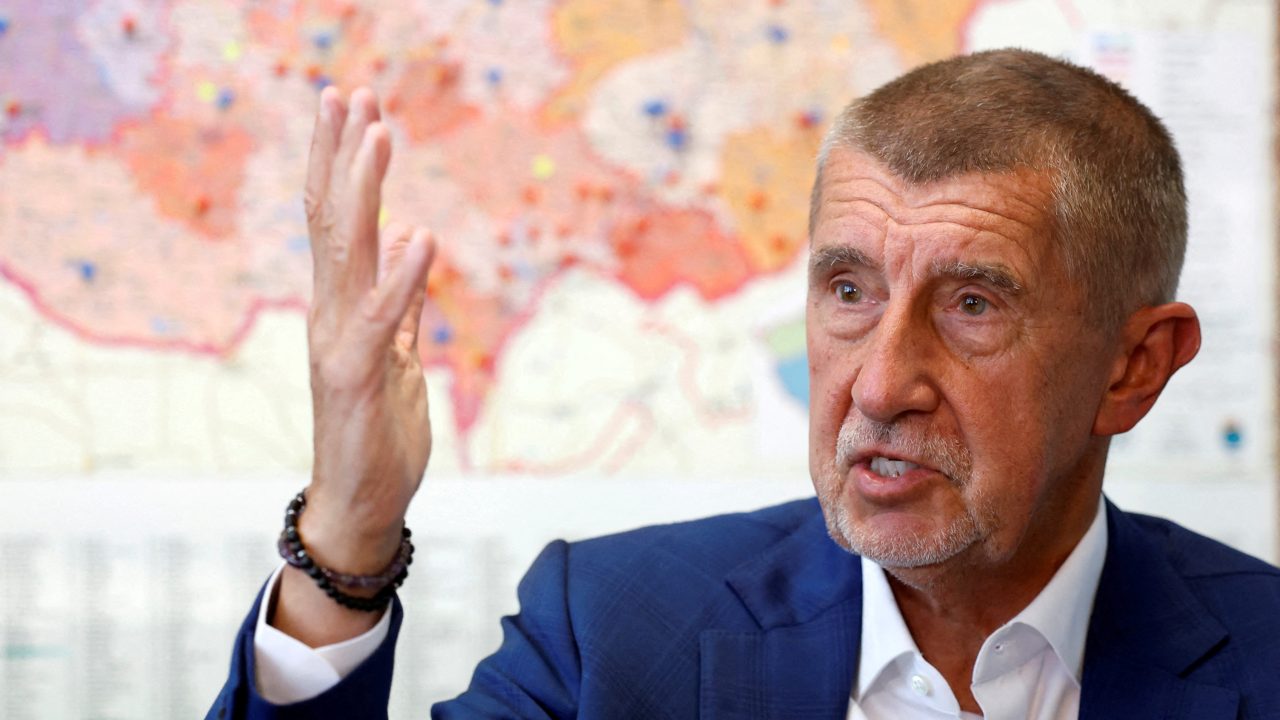
Before the recent Czech elections, there were predictions that a win for the populist party ANO and its leader Andrej Babis would be bad for Taiwan, which has enjoyed strong relations with Czechia over the last parliament.
This is not because ANO itself was seen as particularly pro-China, but rather that its plausible coalition partners like the SPD and the Motorists were. And indeed, ANO won the most seats but not an overall majority and so is trying to form a coalition with those two parties.
This effective uncertainty in the result precludes clear analysis; effectively the result for policy towards Taiwan is still unknown. It’s possible that in the end ANO will fail to form a government.
One clear example: The proposed foreign minister is Filip Turek, the honorary president of the Motorists. Turek is now embroiled in a scandal over racist, sexist and homophobic posts he allegedly made on social media. The Czech president, Petr Pavel, has implied that if Turek made those posts, he will refuse to appoint him.
Pavel’s own actions mark him as a Czech who supports strong ties with Taiwan. After his own election in 2023, he took a congratulatory phone call from Taiwanese President Tsai Ing-wen (蔡英文). Taiwanese Foreign Minister Lin Chia-lung (林佳龍) visited Prague in September, his trip coinciding with the opening of an exhibition featuring items from Taiwan’s National Palace Museum.
Babis was previously prime minister from 2017 to 2021. His term ran across the end of a period of heavy Chinese influence in Czechia, and the start of more public engagement with Taiwan. However, these events were arguably driven by other Czech politicians, like China-friendly president Milos Zeman, who had employed a Chinese energy tycoon as an advisor, and Senate speaker Milos Vystrcil, who visited Taiwan in 2020.
Vystrcil’s trip came after the death of his predecessor, Jaroslav Kubera, who had publicly announced his intention to visit Taiwan. In response the Chinese embassy in Prague had threatened retaliation on Czech companies. This led Babis to say he supported replacing the Chinese ambassador. Babis was still prime minister when the Czech Republic donated 30,000 doses of Covid-19 vaccine to Taiwan in 2021.
Lithuania is another country that Taiwan has enjoyed growing ties with since 2020. Taiwan opened a representative office in Vilnius in 2021, and Beijing withdrew its ambassador in a fit pique. Lithuania held its own parliamentary elections in October of last year, where the new governing party, the LSDP, entered on a promise to normalize ties with China.
That hasn’t happened. The new prime minister, Gintautas Paluckas, said in April of this year that Lithuania would not make “any concessions, no apologies,” but that Beijing should send its ambassador to Vilnius to restore ties. That hasn’t happened, and Paluckas himself is now out of a job, having resigned in scandal.
The new prime minister, Inga Ruginiene, kept Paluckas’s foreign minister, Kestutis Budrys, who supports improving the relationship with China. Her government recently described China as a threat again.
What will happen in the case of Czechia may not follow the same pattern. Babis has already said that Czech parliamentarians should not visit Taipei. But the example of Lithuania shows that when a Taiwan-friendly party loses an election, Taiwan doesn’t automatically lose, too.




Leave a Reply