
Taiwanese people tend to be pessimistic about the economy. From the mid-2000s to the mid-2010s, economic approval numbers hovered around 10%, according to the widely cited Taiwan Sentiment Tracker. That started to change around 2019, as Taiwan’s semiconductor manufacturing left international competitors in the dust.
Now, for the first time in 20 years, more Taiwanese say the economy is doing well. The “golden cross,” as local pundits have dubbed it, comes as strong demand for AI chips drives Taiwan’s GDP to an 11% projected annual growth rate.
“What makes this poll so unique [is] you can say, after 20 years, finally Taiwanese recognize they have good economics,” said Jung-chin Shen (沈榮欽), an associate professor at York University in Canada who comments frequently on Taiwanese politics. “But, of course, if you’re judging from the world, it’s ridiculous. You need to have an economic growth rate as high as 11% to make more than half of people feel: ‘Yeah, you finally have a good economic situation.’”
Proceeds from the current economic boom remain highly concentrated in the high-tech manufacturing sector, with traditional industries stagnating. And the poll results remain divided according to party affiliation, with more than 70% of respondents who support one of Taiwan’s two opposition parties holding disfavorable views of the economy.
But the fact that the country’s economy is even within striking distance of a positive net rating is historically significant, especially with November’s round of local elections fast approaching.
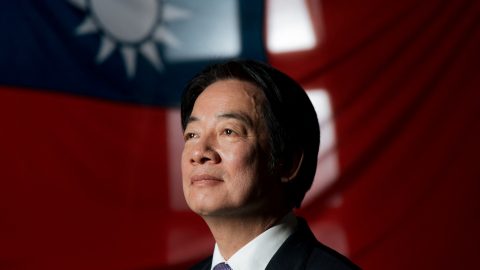
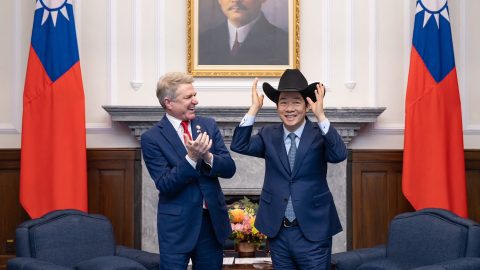
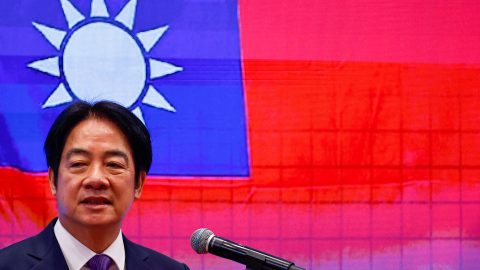
The good vibes have been strong enough to push President Lai Ching-te’s (賴清德) approval rating north of 50% for the first time in over a year, according to the same poll. Lai’s approval fell as low as 31% last summer after his party’s effort to recall a batch of opposition lawmakers failed dramatically. It has been steadily improving since, a trend Shen attributes less to the AI boom, than to the radicalism and infighting in Taiwan’s opposition.
“Sometimes people like you not just because of how good you are, but also about how bad your competitors are,” he said.
The opposition Chinese Nationalist Party, or KMT, which has not won a presidential election since 2012, has been bogged down in infighting since the shock election of firebrand Cheng Li-wun (鄭麗文) as party chairwoman last fall. Animosity between the party’s legislative speaker, Han Kuo-yu (韓國瑜), and its caucus whip, Fu Kun-chi (傅崐萁), spilled into the open last month as legislators worked to finalize Taiwan’s long-delayed budget for 2026.
The KMT’s legislative hardball backfired recently after the legislature froze Lai’s access to a fund often used to support local charities. The Parents’ Association for Persons with Intellectual Disability, Taiwan criticized the move, which affected orders for mooncakes, a traditional mode of supporting people with disabilities in Taiwan.
Lai’s temporary uptick in approval might owe more to the mooncake scandal than voters crediting him with stewarding the AI boom, Shen said.
Political polling in Taiwan demands more skepticism from consumers than in other democracies, where public opinion foundations may be more insulated from partisan influence. But the Taiwan Sentiment Tracker, which has polled citizens over the phone monthly for more than two decades, stands out as a trusted source of insight into Taiwanese politics.
At the very least, the consistency of its methodology allows for fruitful historical comparison, even if the numbers themselves may be skewed one way or the other.
Pollster Dai Li-an (戴立安) has been running the Taiwan Sentiment Tracker for more than two decades. He recently had a falling out with My-Formosa, which had published his polls for a decade. But the conduct of the Taiwan Sentiment Tracker will continue as normal for the foreseeable future, Dai said recently.
Chen Fang-Yu (陳方隅), assistant professor of political science at Soochow University, agrees that the poll number likely do not representative a spontaneous surge of good feelings about Lai. “I’m not saying that Lai Ching-te is doing anything good,” he said. “The best job for him, I think, is not to talk too much. When he starts to make speeches, then people will hate him.”
One move that appears to have made Taiwanese people like Lai was his recent announcement that all Taiwanese adults will receive a cash handout of 10,000 New Taiwan dollars (roughly $315) as part of the 2027 annual budget.
The tactic, which Lai has borrowed from the KMT, is part of a renewed effort by the president to help ordinary Taiwanese people feel the benefits of the country’s AI chip strengths, Chen said.
“Lai Ching-te is now learning how to tell the story of the economic boom,” he said. “The cash transfer, that is the most direct one. You have to make people know about [the boom], especially for those people who are not in the AI industry.”



Leave a Reply