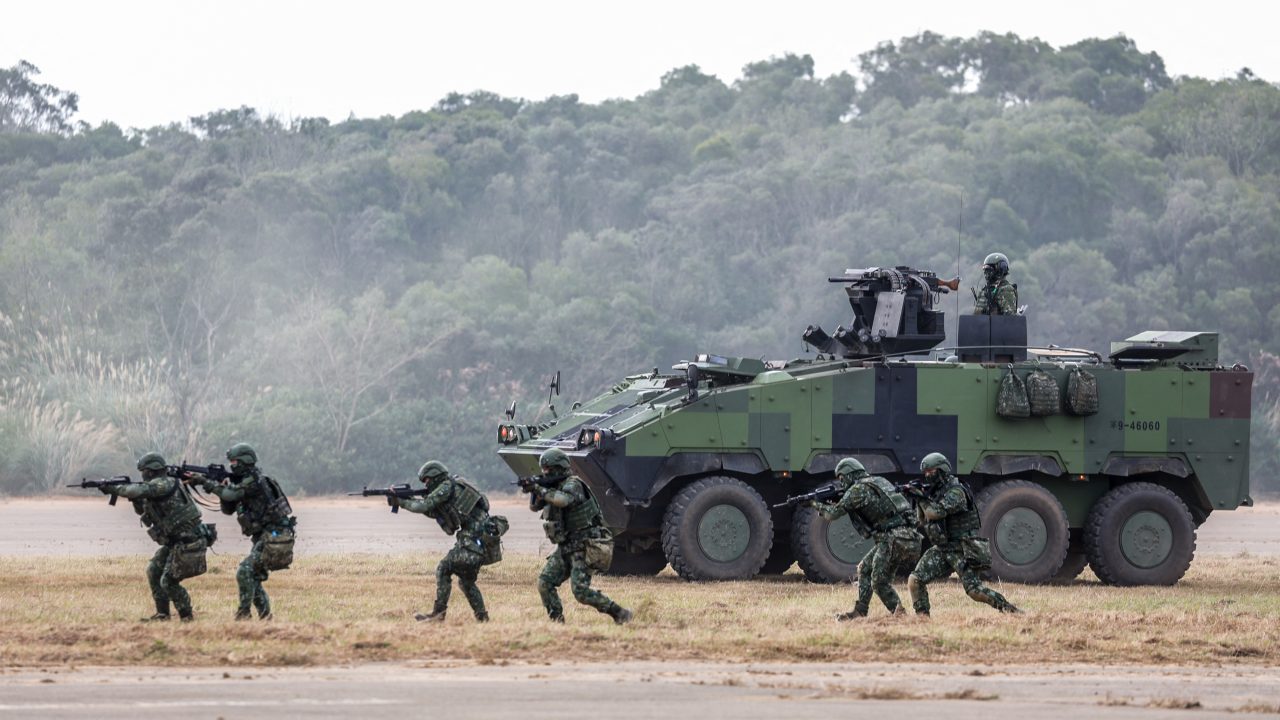
For months, Taiwan’s main opposition Chinese Nationalist Party (KMT) has played the role of obstructor, repeatedly refusing to consider the ruling Democratic Progressive Party’s (DPP) 1.25 trillion New Taiwan dollar (roughly $40 billion) special defense budget proposal.
On Thursday, under growing pressure from the U.S. and with a key procurement deadline looming, the KMT proposed its own alternative.
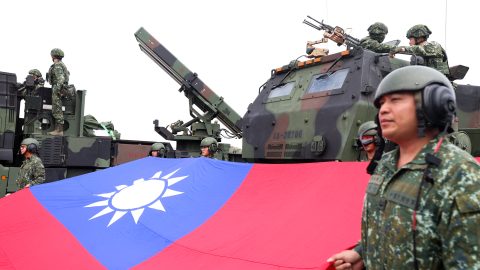
The draft plan would immediately allocate NTD 350 billion (roughly $11 billion) for national defense, a figure the party said would be sufficient to facilitate the purchase of eight weapons systems from the latest U.S. arms package, including self-propelled howitzers and Javelin anti-tank missiles.
KMT lawmaker Lin Pei-hsiang (林沛祥) said that a consensus was reached after a meeting of the entire party caucus on Thursday morning.
“Our position is straightforward,” KMT spokesman Huang Tzu-chuan (黃子銓) said in a statement to Domino Theory. “Taiwan’s defense spending must be tied to clearly defined operational needs, completed planning and approval procedures, and items that are concrete and executable.”
The KMT’s proposal is expected to be discussed on the floor of Taiwan’s legislature tomorrow, alongside rival proposals from the DPP and the smaller opposition Taiwan People’s Party (TPP), which proposed NTD 400 billion (roughly $12 billion) in defense spending in late January.
“It seems to suggest that, to the degree that we think that the TPP and KMT are acting as political parties really ought to act in a democracy, they’re trying triangulate what the voters want to see,” said Michael Hunzeker, director of the Taiwan Security Monitor at George Mason University, in a phone interview prior to the KMT’s announcement.
Lin said Thursday that a consensus was reached after a full meeting of the party caucus during which legislators conveyed their opinions to KMT Chairwoman Cheng Li-wun (鄭麗文).
Cheng, who successfully waged an outsider campaign to seize the party’s leadership last year, has been strident in her criticism of Taiwan’s longstanding reliance on the U.S. Cheng published an essay in Foreign Affairs earlier this week arguing that Taiwan should continue to work with the U.S. while pursuing more opportunities for dialogue with China.
Last month, after 37 U.S. lawmakers co-signed a letter to Taiwan’s legislative leadership calling on them to approve the DPP’s proposal, some members of the KMT responded with disgust.
“Many party members don’t even know who those U.S. senators criticizing the opposition are,” said KMT Vice Chairman Hsiao Hsu-tsen (蕭旭岑) at the time. “After all, they’re just legislators.”
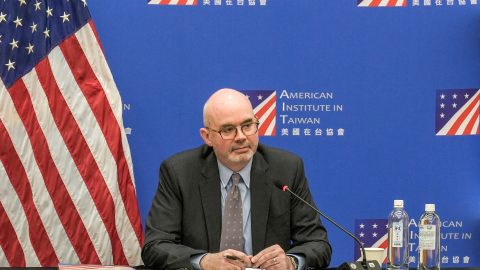
“I think some members of the KMT are trying to do something [with the U.S.] that could be called ‘burn the bridges,’” Tony Hu (胡振東), former Pentagon senior country director for Taiwan, said during an event at the Institute for National Policy Research in Taipei last week. “Once you burn the bridges, there’s no way to go back.”
In the days leading up to Thursday’s announcement, a gap appeared to have emerged between the KMT’s policy think tank, which proposed the NTD 350 billion number, and key members of the party’s legislative caucus, who were pushing for at least NTD 810 billion.
On Monday, KMT Legislator Lo Ting-wei (羅廷瑋) told a local radio station that “there were versions within the party ranging from NTD 350 billion to NTD 810 billion.” The U.S. had demanded a budget of NTD 900 billion, Lo added.
KMT Legislator Hsu Chiao-hsin (徐巧芯), a rising star in the party, has been one of the more outspoken proponents of defense spending levels much closer to the NTD 900 reportedly favored by the U.S. side. In a press conference on Wednesday, Hsu said that she had not yet been provided a copy of the party think tank’s NT$350 billion draft.
“The party’s think tank cannot replace the caucus,” senior KMT figure and influential media personality Jaw Shaw-kong (趙少康) said at the same press conference. “It is not acceptable that the foundation did not give lawmakers a proposal that they were supposed to discuss the next day.”
The KMT has criticized the DPP’s special defense proposal as a “black box” that is too short on details to merit legislative approval. It has insisted for months that President Lai Ching-te (賴清德) visit the legislative branch to deliver a state of the union address and respond to lawmakers’ concerns. The DPP has said doing so would be unconstitutional.
In December, the U.S. passed $11 billion in arms sales for Taiwan. The legal agreement governing the purchase of major components of that package is set to expire on March 15. If Taiwan’s legislature does not come to a new defense spending agreement by that date, the price tag for those weapons would be subject to further increase.
“We will make every effort to move the process forward as quickly as possible,” said Huang, the KMT spokesman.





Leave a Reply