
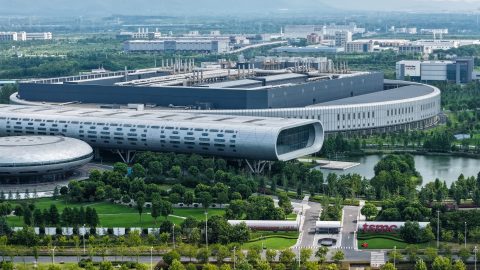
Taiwan Semiconductor Manufacturing Company is the most consequential business for Taiwan’s economic and national security. As TSMC builds foundries around the world, some are worried that this diversification will make Taiwan more vulnerable to annexation by China. The Taiwanese political elite share these worries — at least to some degree — and have the regulatory authority to disapprove TSMC’s new fabs in Germany, Japan and the U.S. Why aren’t they doing so?
The simple answer is an alignment between the interests and constraints of TSMC and the Taiwanese government. The government was instrumental in TSMC’s founding. Since then, a mutual dependency has developed. While the Taiwanese government may feel some apprehension about TSMC’s current outbound investments, it is not restricting them, given their alignment on bolstering TSMC’s global presence and their shared reliance on the U.S.
As Shih-Chang Hung (洪世章), a professor of technology and innovation management at National Tsing Hua University, put it, “The relationship between the Taiwanese government and TSMC can be compared to that of Romeo and Juliet — each needs the other.”
As Taiwan was undergoing rapid industrialization in the 1970s and 1980s, the Taiwanese government employed a strategic industrial strategy called “picking the winner,” said Hung. With a focus on high technology, the government invested in industries where it believed Taiwan could gain a comparative advantage. Hung explained that at the time, Taiwan was a developmental state, meaning that while “in the U.S. system … the market decides everything … in East Asia, like Japan, Korea and Taiwan … they don’t so much trust the market. They think we can govern the market.”
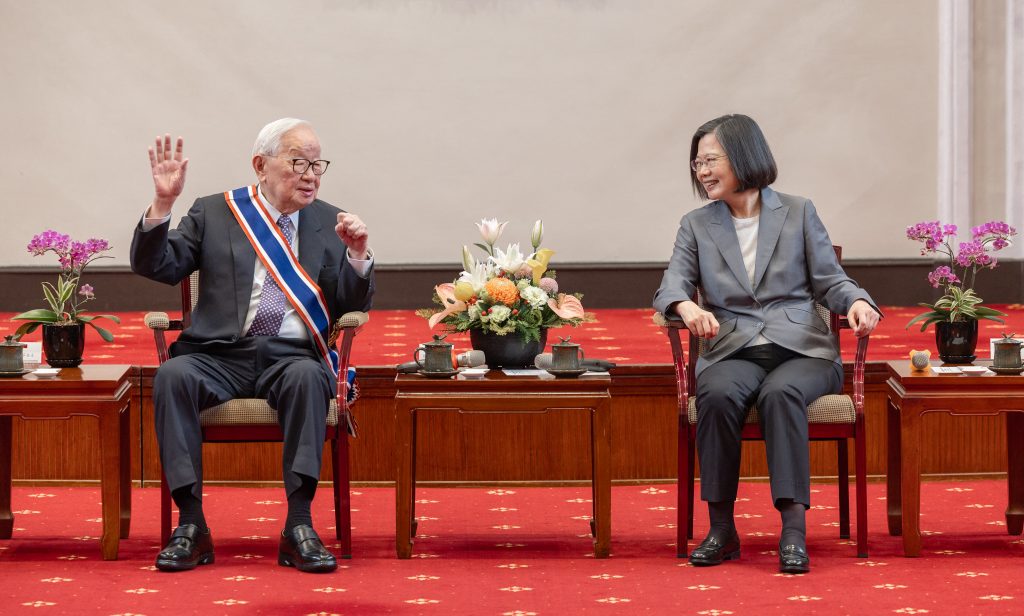
K.T. Li (李國鼎), known as the “father of Taiwan’s economic miracle,” convinced Taiwanese-American Morris Chang (張忠謀) to move back to Taiwan and help build up Taiwan’s semiconductor industry. When Chang founded TSMC in 1987, he did so with $100 million in seed money from the Taiwanese government. Taiwan’s Executive Yuan claimed 49% ownership of TSMC and convinced Dutch company Philips and several wealthy Taiwanese families to invest the remainder. This government support was crucial for TSMC’s survival at the outset, because semiconductor manufacturing is notoriously capital intensive.
The Taiwanese government ultimately encouraged privatization and competition across Taiwan’s economy because it believed that while an industry could be incubated by the government, state-owned enterprises would inevitably fail, said Ling-Ming Huang (黃令名), a Chung Shan Medical University professor focused on the history of science and technology. The government’s share in TSMC has significantly decreased since 1987. TSMC “is by no means a state-owned company, it is an international company,” said Chun-Yi Lee (李駿怡), a professor of Taiwan studies and global development at the University of Nottingham’s School of Politics and International Relations. Although Taiwan still holds a seat on TSMC’s board, and the National Development Fund — representing the Executive Yuan — remains TSMC’s largest shareholder, the government’s 1.65 billion shares of the company now only comprise a 6.38% stake.
The $100 million investment the Taiwanese government made in 1987 was a risky one. Taiwan, as a developing economy, was essentially “throwing spaghetti on the wall to see what sticks,” said Hung. Taiwan took a chance on TSMC, and it paid off.

Cindy Whang (黃詩婷), an international trade law professor at National Chung Hsing University, used the Chinese idiom “the lips and teeth grow together” (脣齒相依) to compare the current dynamic between TSMC and the Taiwanese government. In other words, despite the fact that TSMC is an independent company, it has developed a natural mutual dependency with the Taiwanese government.
Since 1987, the company has grown to a market capitalization of $889.21 billion. Much of TSMC’s growth has occurred since 2020 due to a number of factors including greater digital demand during the COVID-19 pandemic and the AI surge. Now TSMC’s market value is larger than Taiwan’s total economic output, which totaled $755.1 billion for 2023. Beyond directly contributing to Taiwan’s GDP and employment, TSMC attracts foreign investment to Taiwan and supports an ecosystem of related companies, including local suppliers and research and development centers.
TSMC also provides the Taiwanese government legitimacy and leverage in the global arena. Following the explosion of the semiconductor industry in 2020, then-Taiwanese President Tsai Ing-wen (蔡英文) penned an op-ed in Foreign Affairs in which she wrote, “Our semiconductor industry is especially significant: a ‘silicon shield’ that allows Taiwan to protect itself and others from aggressive attempts by authoritarian regimes to disrupt global supply chains.” Through this global, values-based framing, the Tsai administration “tried to position Taiwan beyond its relationship with China,” said Yuan-Ming Chiao (焦源鳴), a professor of political theory and cross-strait relations at Wenzao Ursuline University of Languages. “These narratives are very important in that regard … to position Taiwan, not just in terms of economic linkages, but also ideological ones.”
As for TSMC, the company benefits from Taiwan’s favorable industrial policies and the legacy of semiconductor manufacturing in Taiwan, which has proven to be difficult to replicate elsewhere. Hung of National Tsing Hua University pointed out that the Taiwanese government subsidizes production factors like water and electricity. The government also provides financial incentives to TSMC and other high tech companies, including a 25% tax break for substantial R&D investments and a 5% tax break for purchasing advanced manufacturing equipment locally. To facilitate a well-functioning semiconductor ecosystem, the government provides land and infrastructure through the creation of industrial parks, research centers and transportation networks. Hung said the government supports talent cultivation so that “TSMC doesn’t spend a penny to get the best talent from Taiwan.”
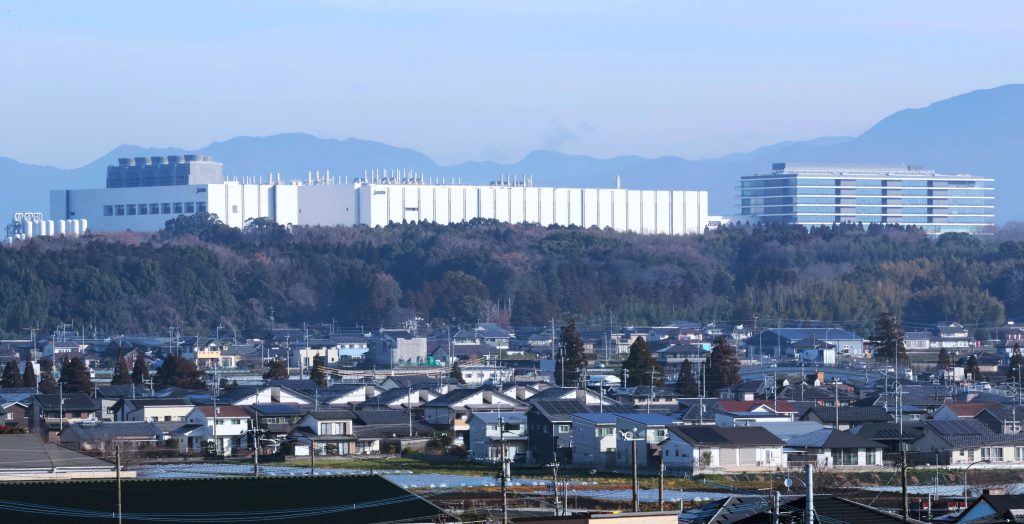
To give more context for TSMC and the Taiwan government’s relationship today, Whang of National Chung Hsing University thinks it’s important to highlight the conflict that occurred in the 2000s over TSMC’s desire to invest in China despite Taiwan’s ban. TSMC was becoming a key player in the semiconductor manufacturing industry, amassing a market share of 32% by 2000. But the company worried it would lose out to competitors like Intel and Samsung without access to the China market. The Taiwanese government was concerned that removing the ban would lead to the hollowing out of the semiconductor industry in Taiwan, as well as slow unification with China through economic integration. In the end, the government agreed to somewhat of a compromise by lifting the ban on investing in China while requiring that the most advanced semiconductor technology stays in Taiwan. Despite the government’s concerns, it couldn’t tell TSMC that “we need to put national security and economic security above your international interests, because, by and large, we live on the same boat, we die on the same boat,” said Whang.
The situation is much different today than it was in the 2000s. TSMC is now primarily expanding into Japan, Germany and the U.S. And the Taiwanese government has different interests and legal mechanisms when it comes to investing in China versus the rest of the world. While regulations that govern most overseas investments are encoded in Taiwan’s trade law, Whang said, when it comes to investing in China, companies are subject to stricter screening pursuant to Taiwan’s decree on cross-strait relations. Kristy Hsu (徐遵慈), director of the Taiwan ASEAN Studies Center at the Chung-hua Institution for Economic Research, noted that Taiwan is technically violating WTO regulations by applying specific rules to China. But China would never complain for fear of inadvertently affirming Taiwan’s sovereignty.
Another difference in TSMC’s current global expansion, according to Hsu, is that it is planning to manufacture some of its most advanced technology abroad. While TSMC’s foundries in China only produce legacy chips, TSMC Arizona is planning to produce cutting edge 2-nanometer chips (the smaller the chip, the more advanced the technology). TSMC’s expansion into the U.S. is notable because Arizona will be the only location besides Taiwan capable of producing TSMC’s most advanced chips. The new foundries in Japan and Germany are focusing on less advanced technology.
A final unique feature of TSMC’s expansion into the U.S., in particular, is an underlying assumption in Washington that the U.S. needs to prepare for a war with China over Taiwan. It is risky to rely on an island claimed by China for the normal functioning of the U.S. military and the global economy. The U.S. also wants to capture the knowhow of chip manufacturing in case Taiwan is annexed by China, said the University of Nottingham’s Lee. To address these concerns, the Trump administration launched the U.S.’s chip resiliency strategy in 2019 by courting TSMC. In 2020 TSMC announced its first fab in the U.S. and has announced two more since. The Biden administration furthered this effort by promising U.S. funding through the 2022 Chips and Science Act.
The Taiwanese government’s feelings about TSMC’s global expansion are complex. Publicly, a representative for the government said, “It’s not that Taiwan’s cake is being cut in half. The cake is getting bigger, and we’re giving some of the extra slices to America and Japan.” But Taiwanese scholars interviewed for this article expressed that the government might be a little more apprehensive than they are letting on. “[T]o be quite honest, I think the government would like it if everything stays in Taiwan,” said Whang. Among the political elite, there is some unease — expressed explicitly by members of the Chinese Nationalist Party (KMT) — that Taiwan is more vulnerable to Chinese invasion now because the U.S. will have less of a reason to protect it.
According to Chien-Huei Wu (吳建輝), a researcher at Academia Sinica specializing in supply chain resilience and U.S.-China competition, the Taiwanese government is still trying to figure out to what degree chip production capacity should stay in Taiwan, because there’s a limit beyond which outbound investment is harmful to Taiwan’s economic and national security. The government does not have a clear answer to this, in part because it depends on what TSMC does in the future and on how the U.S. attitude toward Taiwan evolves.

Despite some apprehension, the Taiwanese government is not currently attempting to restrict TSMC’s expansion abroad due to a natural alignment of their interests. Taiwan depends more on trade significantly than most major economies. By diversifying and building redundancy, TSMC is strengthening its position in the global supply chain by improving market access and reducing the impact of potential disruptions due to geopolitical incidents, natural disasters or issues sourcing local talent or other production factors. The Taiwanese government likely recognizes the benefit of TSMC aligning with powerful markets that share the same values as Taiwan. And Taiwanese leaders fuse discussions of democracy, geopolitics and chip technology to amplify Taiwan’s global image and align it with the U.S. and other democracies.
TSMC and the Taiwanese government are also similarly constrained by their reliance on the U.S. Lee said TSMC was likely reluctant to invest in foundries in the U.S. due to anticipated labor issues and operational roadblocks. And TSMC’s previous foray into American manufacturing via its subsidiary WaferTech was a failure. But since the major chip design firms, including Nvidia and AMD, are American, and the U.S. supplies critical manufacturing inputs to TSMC, the company has no option but to defer to the U.S., said Wu. In fact, a whopping 60% of TSMC’s net profit comes from the U.S. Parallelly, if the Taiwanese government were to meddle in TSMC’s investment in the U.S., this would strain the U.S.-Taiwan relationship. The geopolitical reality is that Washington protects Taiwan, and TSMC will abide by “Uncle Sam’s wish,” said Huang.
The impact of TSMC’s expansion into the U.S. on Taiwan’s economic and national security has yet to be seen. The next essay will explore whether the semiconductor industry in Taiwan really does protect the island from Chinese aggression and what Taiwan should do to bolster its security while respecting the autonomy of its semiconductor behemoth.


Leave a Reply