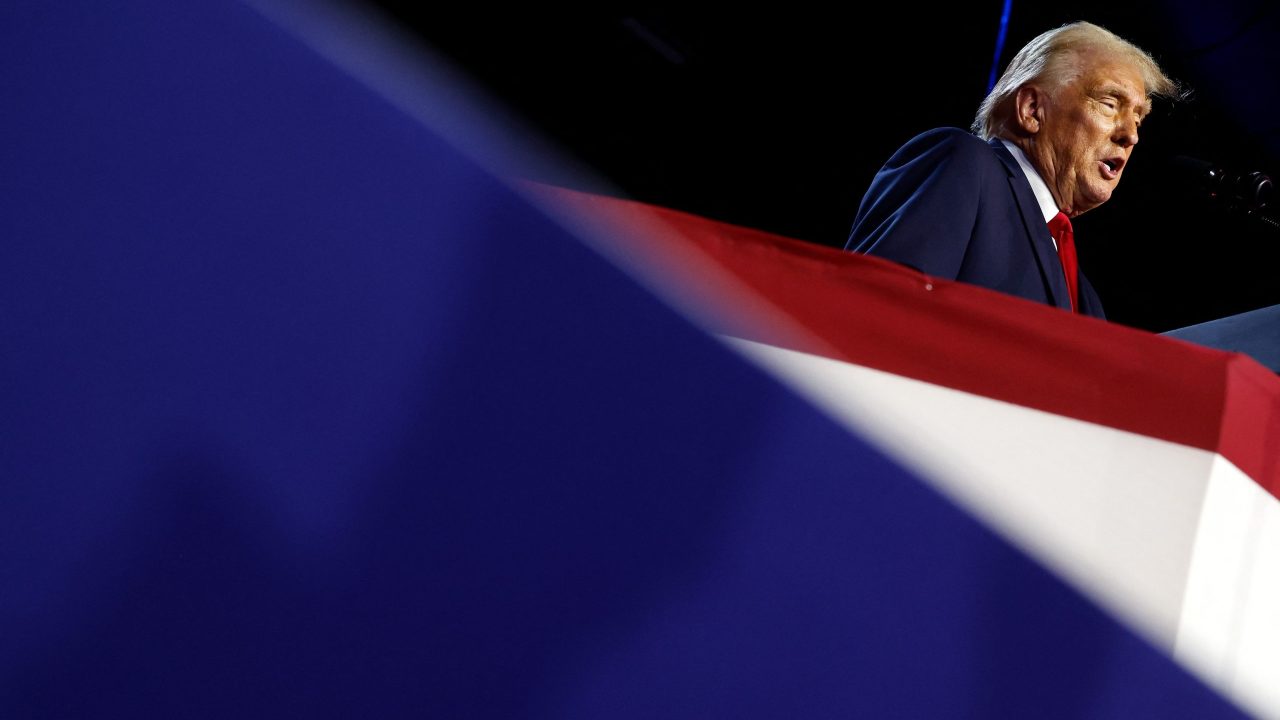
In typical Donald Trump fashion, it is difficult to predict exactly what approach the president-elect will take to the chip industry.
During his first term, Trump initiated a shift toward protectionism to address China-related national security concerns. In 2019, Trump placed China’s telecom giant, Huawei, on the Bureau of Industry and Security’s Entity list. The government worried that if Huawei 5G infrastructure were to proliferate across the U.S., the Chinese government would be able to access sensitive, proprietary American information via “backdoors” in the network. Huawei’s designation as a restricted entity prevented Americans from supplying the company without a license, meaning that Huawei was cut off from American semiconductors, as well as the equipment used to design chips. In 2020, Trump strengthened controls by employing the Foreign Direct Product Rule, which effectively cut Huawei off from chip companies like TSMC that use American-origin tools. Trump’s administration also pressured allies to get onboard — namely the Netherlands, which supplies China with critical chipmaking lithography equipment via ASML.
Trump worked on onshore semiconductor manufacturing, successfully negotiating with TSMC to open a new fab in Arizona. He also imposed a 25% tariff on Chinese chip imports and initiated a Section 301 investigation into China’s intellectual property practices, industrial policy and forced tech transfer. The investigation finally concluded this year, leading the administration of U.S. President Joe Biden to increase tariffs on Chinese chips to 50%.
Biden deepened Trump’s protectionist approach to semiconductor policy on all remaining fronts, but he also tried to institutionalize chip policy, taking a less ad-hoc approach than Trump’s. For example, in addition to adding Chinese technology companies to the Entity List, the Biden administration implemented industry-wide export controls on semiconductors and semiconductor manufacturing equipment in October 2022 that he has strengthened each year since. This has been dubbed the “small yard, high fence” approach, whereby trade with China is focused on de-risking rather than decoupling. The Biden administration also negotiated a multilateral agreement with the Netherlands and Japan to better align their chip export policies with the U.S. Finally, Biden advocated for and signed into law the 2022 CHIPS and Science Act, which provides financial incentives for chip manufacturing in the U.S., including for TSMC’s new fabs in Arizona.
As much as Trump has chafed at the inadequacy of Biden’s leadership, the two obviously have the same goals when it comes to creating and implementing chip policy: preserve the U.S.’s technological and military primacy and prevent China from supplanting it. They have even been remarkably aligned on method. But Trump won’t simply continue Biden’s policies, and it seems likely — according to what we already know of his foreign policy style, as well as his recent statements on the topic — that his approach will be unpredictable and unilateral.
Trump was supportive of Taiwan during his first term — in some ways, unusually so. But his sentiment toward Taiwan and TSMC seems to have shifted in the run-up to the election. In a July interview with Bloomberg Businessweek, Trump said, “I wouldn’t feel so secure right now, if I was them, but remember this: Taiwan took our chip business from us, I mean, how stupid are we?” Trump’s take on the evolution of the global chip industry is inaccurate — TSMC introduced specialization into chipmaking by way of the fabless-foundry model, which led to immense growth for both Taiwanese and American chip firms. But what do his comments mean for Taiwan and the U.S.’s semiconductor policy?
Some clarity emerged after Trump appeared on The Joe Rogan Experience podcast in October, where he spoke on Taiwan and chips: “That chip deal [the 2022 CHIPS and Science Act] is so bad. We put up billions of dollars for rich companies to come and … All you had to do was charge them tariffs … In other words, you tariff it so high that they will come and build chip companies for nothing.” Trump then reiterated that Taiwan stole the U.S.’s chip business and said that if companies like TSMC agree to make chips in the U.S., then he will ease tariffs. The threat of imposing tariffs on Taiwanese chips is new.
These recent statements are understandably concerning for many — TMSC’s stock tumbled the day after Trump did his interview with Bloomberg and again after Trump won the election. And despite what Trump says, economic experts have concluded that the trade war did not lead to an increase in manufacturing investment. If Trump were to actually impose tariffs on Taiwanese chips, this would likely lead to significant economic and security repercussions, given that they are the backbone of the world’s economies and militaries.
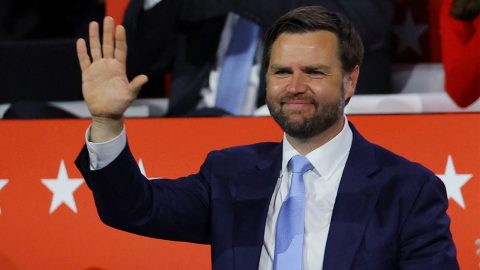
But there are reasons to reserve judgment and concern. First, it is possible that Trump will be reigned in by his advisors regarding his threat to impose tariffs on Taiwanese chips, as well as the many powerful American companies and individuals who rely on Taiwan’s chipmaking prowess to produce their devices. Vice President-elect J.D. Vance and Elbridge Colby, a possible national security adviser, for example, are both aware of the strategic importance of Taiwan to the chip supply chain and think the U.S. should be focusing its resources on fortifying the island. And it is hard to imagine that Trump would be willing to go toe-to-toe with TSMC’s U.S. customers, which include Mark Zuckerberg, Jensen Huang and Satya Nadella.
Second, when it comes to TSMC, Trump is right to question the efficacy of CHIPS Act funding. It was Trump, not Biden, who got TSMC to agree to build its first fab in Arizona. While it is unclear exactly what the terms of this agreement were, it is very much possible that Trump leveraged things unrelated to subsidies — perhaps looser restrictions under the Foreign Direct Product Rule — to cut this deal. TSMC is well on its way establishing three foundries for advanced chip making in the U.S., and one executive has said they are outperforming Taiwan. While TSMC was promised CHIPS Act funding for these foundries, it’s important to highlight that 1) TSMC has not yet received this funding, meaning that it has invested in the U.S. on its own dime, and 2) the amount of money TSMC is investing itself overwhelms in comparison to the amount promised to TSMC through the CHIPS Act.
Third, it is entirely possible that Trump is bluffing or exaggerating. He is known to make false and misleading claims. And it is the public view of Taiwanese officials that Trump’s comments are election rhetoric with little intentionality behind them. It is also possible that Trump is merely trying to project strength and dealmaking prowess. Trump evidently likes to leverage trade mechanisms as bargaining chips and can be unpredictable in his application of them. For example, Trump lifted restrictions on Chinese telecom ZTE in 2018, which some believe was a move meant to curry favor with Beijing.
As the Biden administration finishes its term in the White House and prepares to hand power over to Trump, onlookers will be eager to see whether Biden further develops his comparably predictable chips policy — particularly export controls negotiations with Japan and CHIPS Act funding. Once Trump gets into office, the path forward will be less certain.





Leave a Reply