The Taiwanese government’s webpage documenting China’s global efforts to block recognition of Taiwan’s sovereignty was nearly as old as the internet itself. It was so old, in fact, that when former President Chen Shui-bian’s (陳水扁) administration started publishing the lists in the early 2000s, the sentences sometimes read from top to bottom and right to left. The page survived four terms of Democratic Progressive Party (DPP) rule, two terms of Chinese Nationalist Party (KMT) rule and all the cooling and thawing of relations with Beijing along the way.
Then, in March of last year, the government quietly removed it.
The Ministry of Foreign Affairs’ website now displays different lists — scrubbed of all the negativity. Where one could once find “Cases of China Obstructing Taiwan’s International Participation,” the site now provides “Statements on International Support for Peace and Stability in the Taiwan Strait” and “Taiwan’s International Development Rankings.”
The foreign ministry’s decision to remove the page came as former President Tsai Ing-wen (蔡英文) was preparing to hand over power to President Lai Ching-te (賴清德), who was inaugurated in May 2024. The page had stopped posting information once before, during the 2008 transition between the Chen Shui-bian and Ma Ying-jeou (馬英九) administrations. But updates resumed after local media drew attention to their absence.
Last month, after NOWnews, a local Taiwanese outlet, first revealed that the webpage was missing, the foreign ministry said that it had removed it to avoid making it easier for China to systematically gather intelligence about Taiwan. “The Ministry of Foreign Affairs will continue to promptly counter and refute China’s malicious actions that obstruct Taiwan’s international participation and undermine its sovereignty,” it said in a statement.
Domino Theory used the Internet Archive to review two decades’ worth of foreign ministry webpages.
The majority of episodes detailed in the 2023 annual list described actions taken by Beijing’s representatives directly. After the Delphi Economic Forum in 2023 referred to former President Ma as “the former Nationalist Party president of Chinese Taipei,” the foreign ministry wrote that the decision was “obviously influenced by malicious forces behind the scenes.”
A representative from the foreign ministry did not respond to repeated requests for comment.
In response to the news that the site had been removed, Chen Kuan-ting (陳 冠 廷), a legislator from the DPP, told the Liberty Times, a local outlet, that documenting positive and negative international statements about Taiwan’s sovereignty should not be mutually exclusive. Chen’s colleague in the legislature Wang Ting-yu (王定宇) agreed, saying that the Taiwanese people should be able to see that China’s hostility toward Taiwan does not vary according to which party is in power.
In August 2008, after reports emerged that Ma’s KMT administration was failing to keep the webpage up to date, a spokesperson from the foreign ministry told Taiwan’s Central News Agency that “we are now looking into the matter and will update the information as soon as possible.” For the next eight years while Ma was in office, the reports were less frequent and less thorough, but the page itself stayed in place.
The Tsai administration, by contrast, was hypervigilant in its cataloguing. Its 2018 report alone detailed 55 cases, covering everything from the listing of “Taiwan, China” as a region on the English-language test TOEFL’s website to African nation Burkina Faso’s May 2018 decision to recognize China instead of Taiwan.
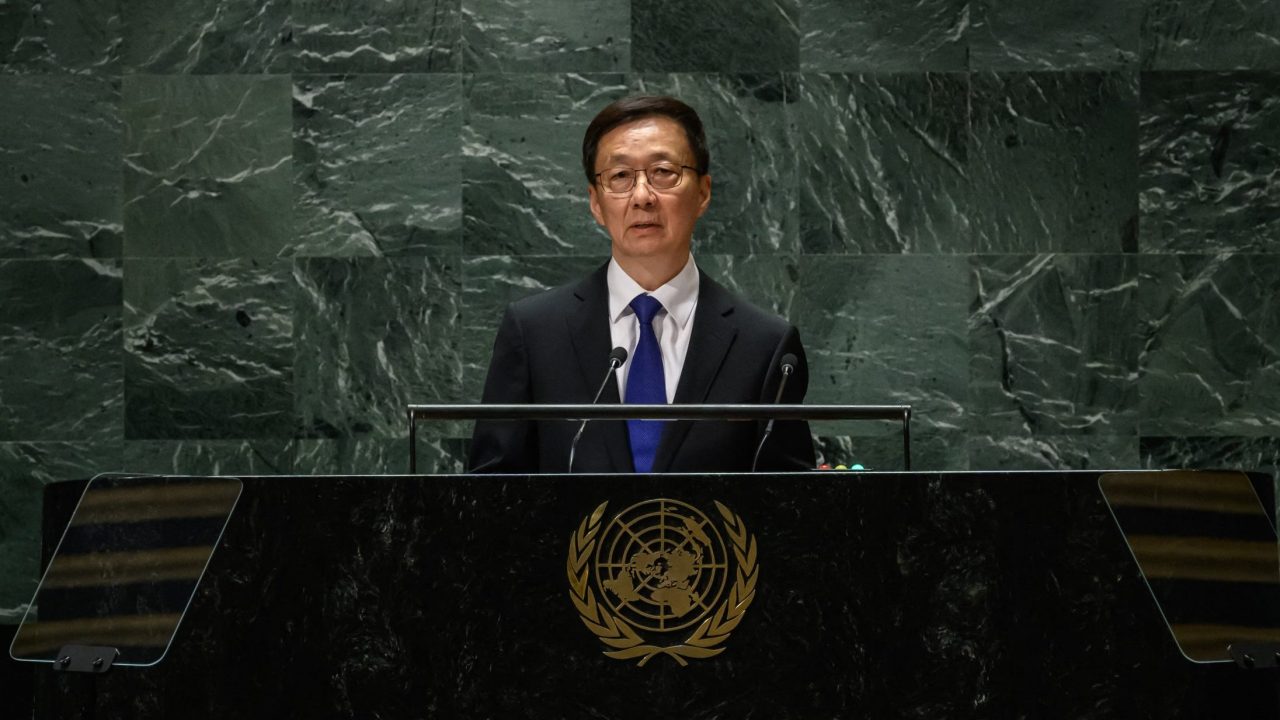
In its last report before the page was removed, the foreign ministry protested Chinese Vice President Han Zheng’s (韓正) repeated assertion of the “One China” principle during a speech at the U.N. General Assembly in September 2023. The page now presents a different account, highlighting Czech President Petr Pavel’s speech at the same U.N. meeting, in which he “condemned China for escalating tensions in the Taiwan Strait and the South China Sea.”




Leave a Reply