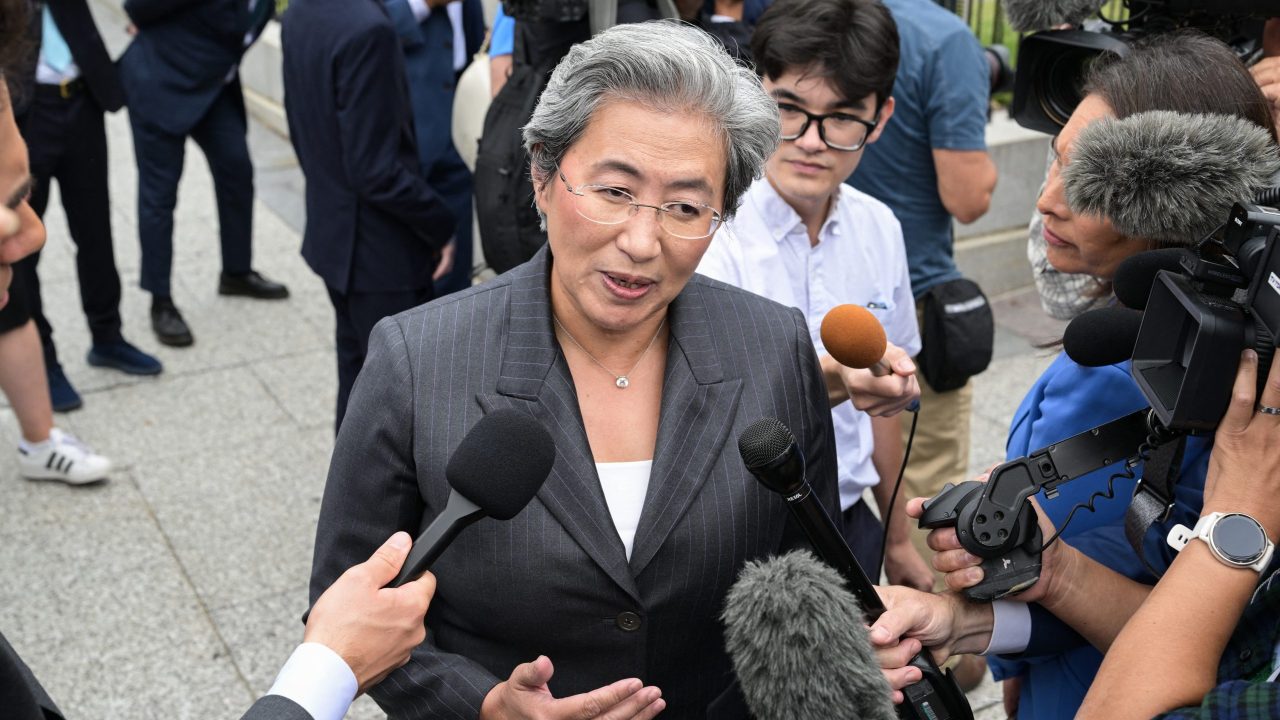
AMD CEO Lisa Su arrived in Taipei today to meet with the heads of TSMC, Foxconn and other major Taiwanese partners, as her company expands its investments in Taiwan.
This visit comes just five months after Su’s last visit to Taiwan in May, when she announced more than $10 billion in investments across the Taiwanese chip ecosystem. AMD is working with ASE and PTI, both Taiwanese chip packaging and testing companies, to help scale advanced packaging. The chip designer is also working with Taiwanese partners including Wiwynn, Wistron and Inventec to develop rack-scale AI infrastructure.
These investments remain on track and are set to grow, Su told reporters outside the Mandarin Oriental hotel in Taipei this afternoon. “We’re increasing that number going forward because our demand has continued to go up.”
In fact, demand is currently outpacing what AMD can supply. “We’re going to substantially increase our supply in 2027, but we can definitely use more,” Su said. “And so that’s one of the reasons that I’m here is to make sure that our entire supply chain ramps up their capability.”
Su is scheduled to meet with the heads of Foxconn, Quanta, Asus, Acer and TSMC.
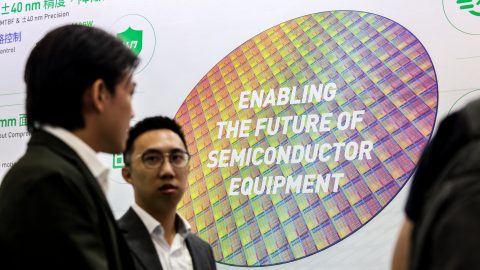
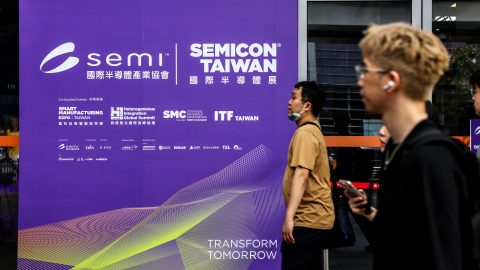
When asked whether AMD would consider investing in a fab, Su said AMD is going to keep its existing business model of outsourcing its chip manufacturing. Still, the pace of development is requiring AMD to collaborate “much more closely” with its partners, planning production together up to five years out “to ensure that you have all of the capacity come up at the same time.” At the Semicon Taiwan trade show last month, the leaders of Taiwan’s advanced packaging industry communicated a similar message about needing to vertically integrate within the ecosystem in order to keep up with short product cycles.
Su also touched on AI safety, arguing that safety innovation can coexist with a short time to market. “I really believe that AI is incredibly good for the world,” Su responded when asked about the risk that some sort of AI doomsday scenario could impact human life. This view contrasts with that of Anthropic chief executive Dario Amodei, who has recently called for regulation to pace frontier AI development because geopolitical and market forces are driving capabilities faster than safety measures can keep up.
Su’s perspective on AI safety seems to more closely reflect that of her cousin, Nvidia chief executive Jensen Huang. Huang has been making the rounds on podcasts and news programs in recent weeks, seemingly in an effort to counter the recent excitement around AI risks. On The Ezra Klein Show, Huang argued that people should trust AI companies to police themselves because they have strong incentives to make their products safe.
When Domino Theory asked whether AMD was discussing contingency plans with Taiwanese partners for possible disruptions in the Taiwan Strait, Su encouraged diversification while emphasizing Taiwan’s central role in global tech. “In general, I think for all businesses it’s good to have geographic diversity, and so we encourage all of our partners to have geographic diversity,” Su said. “But there’s no question Taiwan is absolutely critical to the semiconductor supply chain and very, very critical for AMD.”
Su is traveling down to Hsinchu this afternoon to meet with TSMC. She will then travel to South Korea, where she is expected to meet with Samsung executives and participate in government-hosted AI and semiconductor discussions alongside Korean chipmakers.



Leave a Reply