
Semiconductors and Artificial Intelligence
Speaking at the World Economic Forum in Davos last month, U.S. Treasury Secretary Scott Bessent said that the “single biggest threat to the world economy, the single biggest point of failure” is that the vast majority of advanced chips are made in Taiwan.
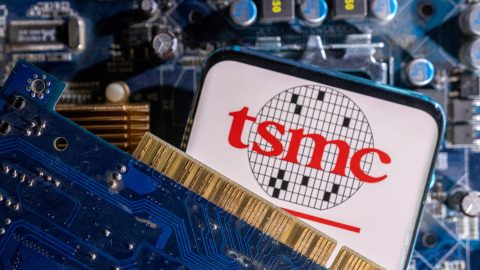
Taiwan and the U.S. announced a trade deal on January 15 that commits Taiwanese semiconductor and technology companies to new, direct investments of at least $250 billion into the U.S.’s semiconductor manufacturing ecosystem in order to “drive a massive reshoring of America’s semiconductor sector,” according to a statement released by the U.S. Department of Commerce. This reportedly includes the $100 billion that TSMC already promised last year. Taiwan’s government will provide up to $250 billion in government-backed credit guarantees to support the investments. In exchange, the U.S. reduced tariffs on Taiwanese imports from 20% to 15%, the same rate given to Japan and South Korea last year.
TSMC’s expansion abroad has stoked concerns in Taiwan about the hollowing out of its semiconductor industry and the weakening of the “silicon shield,” or the protection that Taiwan’s indispensability to the semiconductor supply chain arguably confers against Chinese aggression. In an interview with NewsNation in September, U.S. Commerce Secretary Howard Lutnick said that the Trump administration aims for the U.S. to be able to fulfill 40% of its chip demand through domestic manufacturing by the end of its term. The president of the Chung-Hua Institution for Economic Research, Lien Hsien-ming (連賢明), estimated that less than 15% of TSMC’s leading-edge capacity will be manufactured in the U.S. by that time.
The same day that the trade deal was announced, Taiwan and Phoenix signed a memorandum of understanding to increase cooperation on start-up led innovation. The purpose of the agreement, called the “Taiwan-Phoenix Strategic Technology Partnership,” is to help U.S. companies tap into Taiwan’s semiconductor manufacturing ecosystem, while supporting Taiwanese startups in entering the U.S. market. “Combining Taiwan’s R&D power with Phoenix’s market and clinical environment is a win-win strategy,” said National Development Council Deputy Minister Jan Fang-guan (詹方冠).
One American company that doesn’t need helping tapping into Taiwan’s chip ecosystem is Nvidia, whose CEO, Jensen Huang (黃仁勳), landed in Taipei last week. Many expected Nvidia and the Taipei City Government to sign the land use rights agreement for the construction of the company’s new Asia headquarters in the Shilin District during the trip, but this did not happen. The agreement will be finalized around mid-February, according to Taipei Mayor Chiang Wan-an (蔣萬安). Taipei rejected Nvidia’s proposal to buy the land directly from the current owner, Shin Kong Life Insurance, last year over concerns that the transfer would enable profiteering. In a recent positive development for the project, the Ministry of Economic Affairs approved the company’s application to invest 3.3 billion New Taiwan dollars into its Taiwan subsidiary last week, which is earmarked for the construction of the new office.
Although the land use agreement was not signed, Huang’s trip was nevertheless busy. On Friday, he attended the year-end party for Nvidia’s Taiwan staff and on Saturday he hosted a dinner with top Taiwanese tech executives, which local media dubbed a “trillion-dollar banquet.”
Looking back at 2025, Taiwan’s economy has massively benefited from its tech industries. Driven by the global demand for chips and other AI-related technologies, Taiwanese exports totaled a record high of $640.75 billion across the year. Despite tariff pressure, exports to the U.S. surged 125.9% year on year in December. The finance ministry expects exports for January to have risen between 50% and 56% year on year. “The AI opportunity shows no sign of fading and instead appears to be gaining momentum,” said Beatrice Tsai (蔡美娜), director general of the Ministry of Finance’s Department of Statistics. TSMC’s fourth-quarter net profit rose 35%, beating market forecasts.
In 2026, Taiwanese foundries are expected to raise prices for mature-node chips, or chips larger than 28 nanometers, due to supply constraints, high utilization and AI-driven demand, according to market researchers. TrendForce says that global prices for 8-inch wafers, which are commonly used for mature-node chips, may rise 20% this year.
Defense Tech and Economic Security
Taiwan’s Ministry of National Defense restructured its armored and mechanized infantry brigades last month into combined arms brigades to modernize its forces and improve its ability to deter or respond to a Chinese invasion. “It does provide a foundation for the integration of new technologies, not just drones, but the use of AI in digital command and control systems, probably more air defense systems,” Mike Ryan, a retired Australian army major general, strategist and defense expert, told Business Insider.
In another development for Taiwan’s military modernization, Taiwan’s first domestically developed submarine completed its maiden voyage on January 29. The Narwhal (海鯤) is one of eight submarines that the CSBC Corporation is building for Taiwan with assistance from the U.S. and the U.K. It will use a combat system by Lockheed Martin and carry U.S.-made Mark 48 torpedoes.
Taiwan also collaborated with the U.S. on economic security last month. At the sixth consecutive U.S.-Taiwan Economic Prosperity Partnership Dialogue, American and Taiwanese officials discussed supply chain security across the AI tech stack, unmanned aircraft systems component certification and critical minerals. They focused on countering economic coercion, cooperating in third countries and reducing tax-related investment barriers. U.S. and Taiwanese officials also signed a joint statement on the Pax Silica Declaration, a U.S.-led international initiative to coordinate trusted global technology supply chains.


Leave a Reply