Semiconductors and Artificial Intelligence
Taiwan’s economy has continued to ride the AI wave this past month, with outbound sales in July rising 32.9% year-on-year. Exports could reach over $850 billion in 2026, the Ministry of Finance said, surpassing 2025 numbers by more than 30%.
The Ministry of Economic Affairs announced last month that the industrial production index, which measures industrial output, rose 22.95% year-on-year in June. The semiconductor and electronics component industries drove this growth, while the auto, chemical and fertilizer industries saw declines.
There is some skepticism about the durability of this strong performance. The governor of Taiwan’s Central Bank, Yang Chin-long (楊金龍), warned about the risk of an AI bubble during a legislative hearing in early July. “AI is driven by real growth potential, but it’s the possibility of over-expansion via over-leveraging that concerns us,” Yang said. On July 17, investor anxiety about the risk that massive AI spending will not yield adequate returns led Taiwan’s stock market index to fall 6.47%, the largest single-day decline in its history. TSMC shares fell 7.29%, a day after the company announced that its gross margin for Q3, or the percentage of revenue that remains after costs are subtracted, was projected to decline slightly.
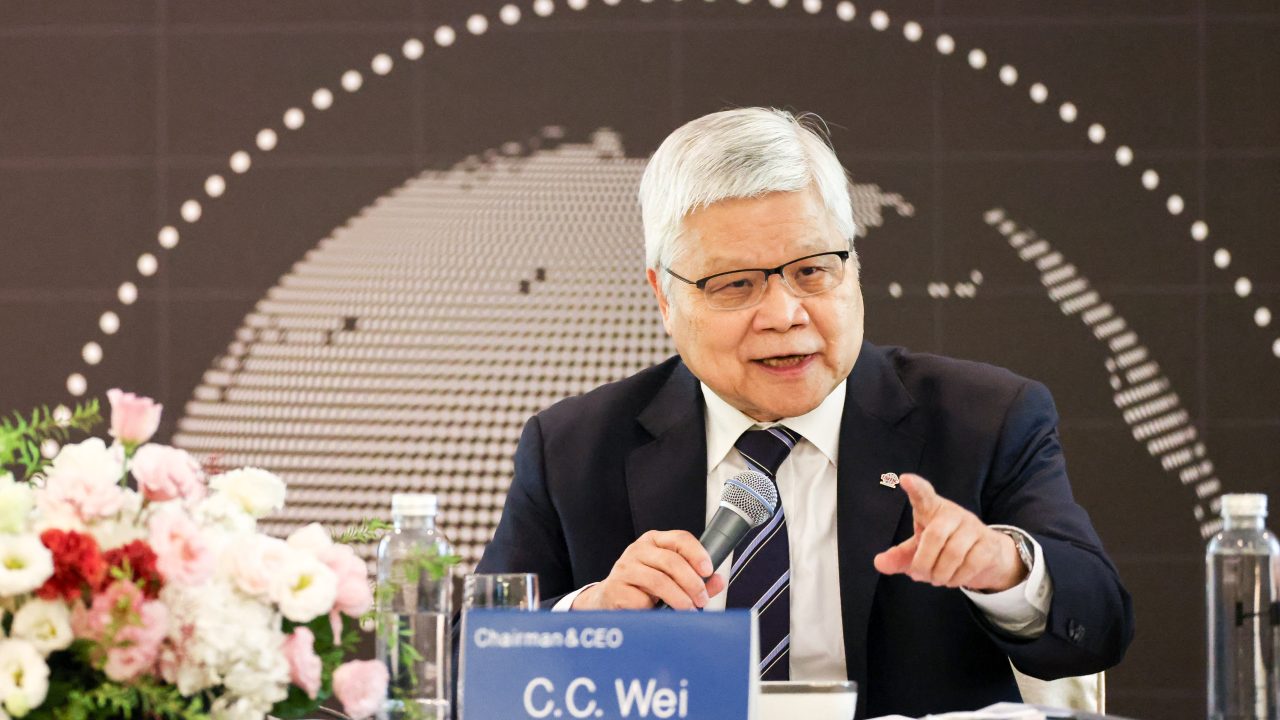
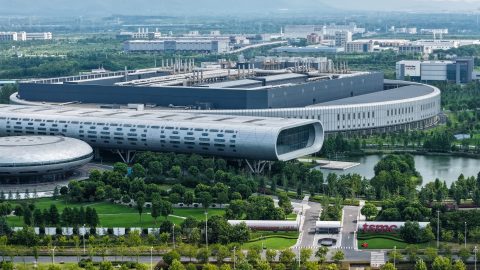
TSMC also recorded a 77% jump in Q2 profit. During its Q2 earnings call in July, the company’s chief executive, C.C. Wei (魏哲家), projected confidence about the strength of AI demand, upgrading its forecast for 2026 capital expenditure growth to 14%. TSMC also pledged another $100 billion investment into its buildout in Arizona in July, adding to the $165 billion the company has already promised to invest in new logic wafer fabs, advanced packaging facilities and a research and development center.
In other TSMC news, the company announced that its plant in Kumamoto, Japan was left unscathed after a 7.1-magnitude earthquake hit the area on July 29. Despite a temporary shutdown, the quake will have a limited impact on Q3 revenue, according to experts who spoke to Focus Taiwan.
And a former deputy manager at TSMC was indicted last month by prosecutors in Taiwan for allegedly attempting to leak core technology to China. This is the first indictment for corporate espionage in the chip industry since semiconductor leaks were brought under the purview of the National Security Law in 2022. The government will pursue a seven-year prison sentence, which is a harsher punishment than similar cases previously tried under the Trade Secrets Act.
The AI craze has begun to have a noticeable impact on daily life in Taiwan. A survey conducted by Mastercard found that 70% of Taiwanese use AI agents at least once a week, particularly ChatGPT and Gemini. In an interview with the Central News Agency yesterday, Education Minister Cheng Ying-yao (鄭英耀) encouraged students to use AI responsibly and learn to think independently. In terms of professional life, employees of the electronics component industry worked an average of 28.7 hours of overtime in June, according to Taiwan’s Directorate General of Budget, Accounting and Statistics. This is a record high, far above the 9.1-hour average across the industrial and service sectors.
Defense Tech
The National Chung-Shan Institute of Science and Technology and U.S.-based defense tech startup Shield AI announced on August 6 that they had successfully piloted an autonomous search mission with three Mighty Hornet III (勁蜂一型) anti-armor uncrewed aerial vehicles, or UAVs. “You can build ten million drones, but you can’t train ten million drone pilots,” Shield AI President Brandon Tseng said in a statement. “[W]e look forward to continuing to build with partners like NCSIST to deliver the mission autonomy Taiwan needs to deter conflict.”
During the ten-day annual Han Kuang exercises, which began last week, Taiwan has showcased new defense tech, including two locally built, medium-class strike drones designed to bolster Taiwan’s littoral defense. Drones are becoming a key pillar of Taiwan’s asymmetric defense capabilities, but their procurement has become a point of political contestation over the defense budget. Taiwan’s cabinet will propose a 16% rise in defense spending next year, the Central News Agency reported on Sunday. More details will be released on August 20.
In addition to combat readiness, the exercises are also testing brief periods of mobile internet slowdown from 5G to the lowest available bandwidth in an effort to remind citizens that texting, calling and satellite technology can be used to communicate even in the event of an attack on communications infrastructure by China, Domino Theory reported. The drills will also simulate the wartime relocation of weapons production lines operated by private-sector defense contractors.



Leave a Reply